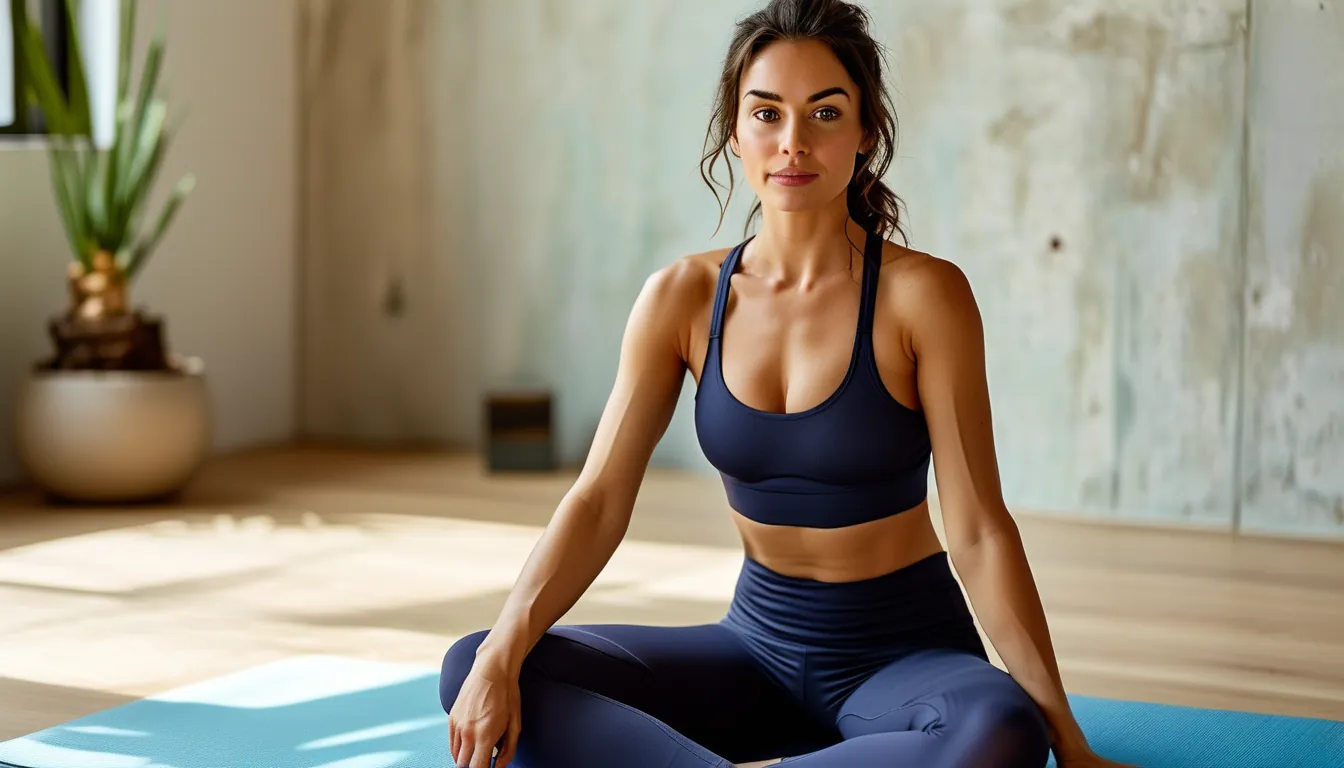
Why Pilates Breathing Feels Backwards, and When It Finally Clicks
Quick Answer: Pilates asks for lateral breathing — air directed into the sides and back of the ribcage — because the usual alternatives are both incompatible with the method: belly breathing requires releasing the very abdominals you are training, and chest breathing feeds the neck tension the work is trying to remove. It feels backwards because you are overriding two lifelong habits at once while also moving. The click, which for most people arrives somewhere in week three to six, is the moment rib expansion and abdominal engagement stop competing for the same space — and the entire practice suddenly costs less effort.
If you are in the phase where the breathing feels like a second workout stacked on the first, you are not behind. You are mid-rewire, and there are ways to speed it up.
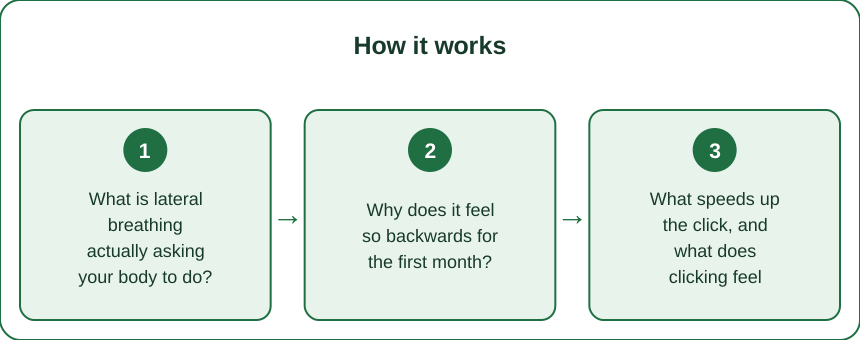
What is lateral breathing actually asking your body to do?
To route air around the working muscles instead of through them.
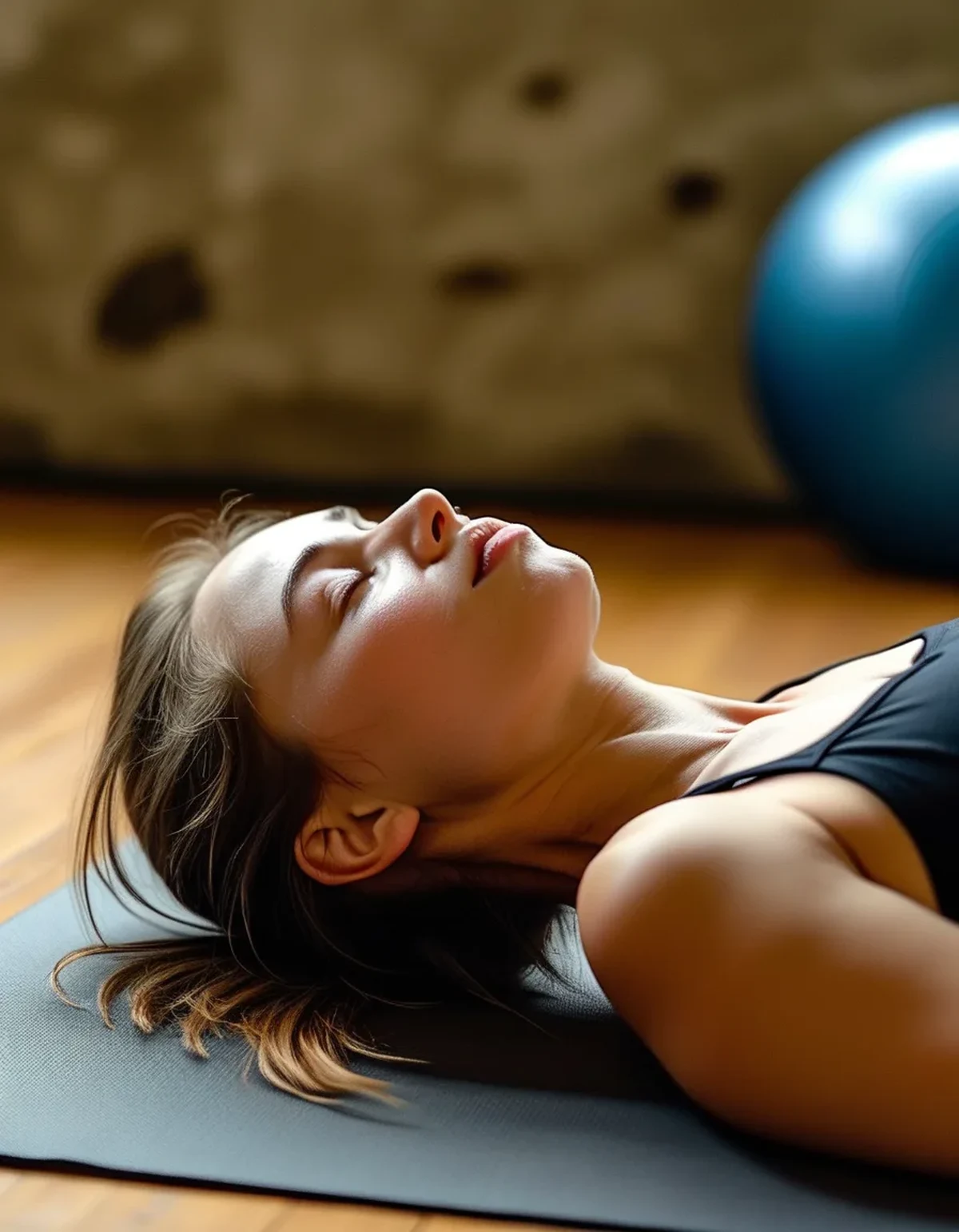
A resting body breathes with the diaphragm dropping and the belly swelling outward — efficient, calm, and completely dependent on the abdominal wall staying slack. Pilates keeps the deep abdominals gently engaged through every exercise, which closes the belly-expansion route. The air has to go somewhere, and the method’s answer is sideways: the lower ribs swing outward like bucket handles, expanding the ribcage east-west and into the back while the front of the torso stays composed.
This is not an invented style so much as a recruited one — the rib mechanics exist in everyone and simply go unused when the belly route is available. Put your hands on your lower side ribs and breathe into your palms: the widening you feel is the entire technique in miniature.
The exhale carries the second half of the contract. Breathing out engages the deep corset naturally — it is why you exhale sharply when you brace for anything — so Pilates times the exhale to the hardest phase of each movement, letting the breath itself recruit the abdominals right when the exercise needs them most. Inhale to prepare, exhale to move is not choreography for its own sake; it is borrowing free core engagement from respiratory mechanics.
Seen that way, the breath is not an accessory to the workout. In a real sense it is the workout, and the limbs are resistance.
Why does it feel so backwards for the first month?
Because you arrive with one of two deeply installed habits, and Pilates contradicts both.
The belly breathers — including everyone who has done yoga pranayama or meditation apps — have trained soft, downward, expansive breath as the definition of doing it right. Pilates asking for engaged abdominals during the inhale reads to that nervous system as tension, even as a small betrayal of good breathing. It is neither; it is a different tool for a different job, but the first weeks genuinely feel like being asked to relax and brace at once.
The chest breathers and the lifters have the opposite collision. Years of bracing for effort — or simply of shallow desk breathing — means their inhale lives high in the chest and their idea of core engagement is a breath-hold. Pilates forbids the hold: movement continues through the breath, so the familiar strategy of sealing everything and pushing is unavailable, and effort suddenly has no anchor.
Add the coordination tax — counting, moving, and breathing on a prescribed rhythm is genuine dual-tasking, and dual-task load is highest when either skill is new — and the backwards feeling is fully explained. Your breathing is not bad. Your automation is busy being rebuilt, and rebuilt automation always passes through a clumsy manual phase.
The practical consolation: instructors watch for held breath above all, because a held breath means the system defaulted to old firmware. An audible, even theatrical exhale is not a beginner tell — it is the repair working.
What speeds up the click, and what does clicking feel like?
Three accelerators, all practiced off the mat, where the coordination tax is zero.
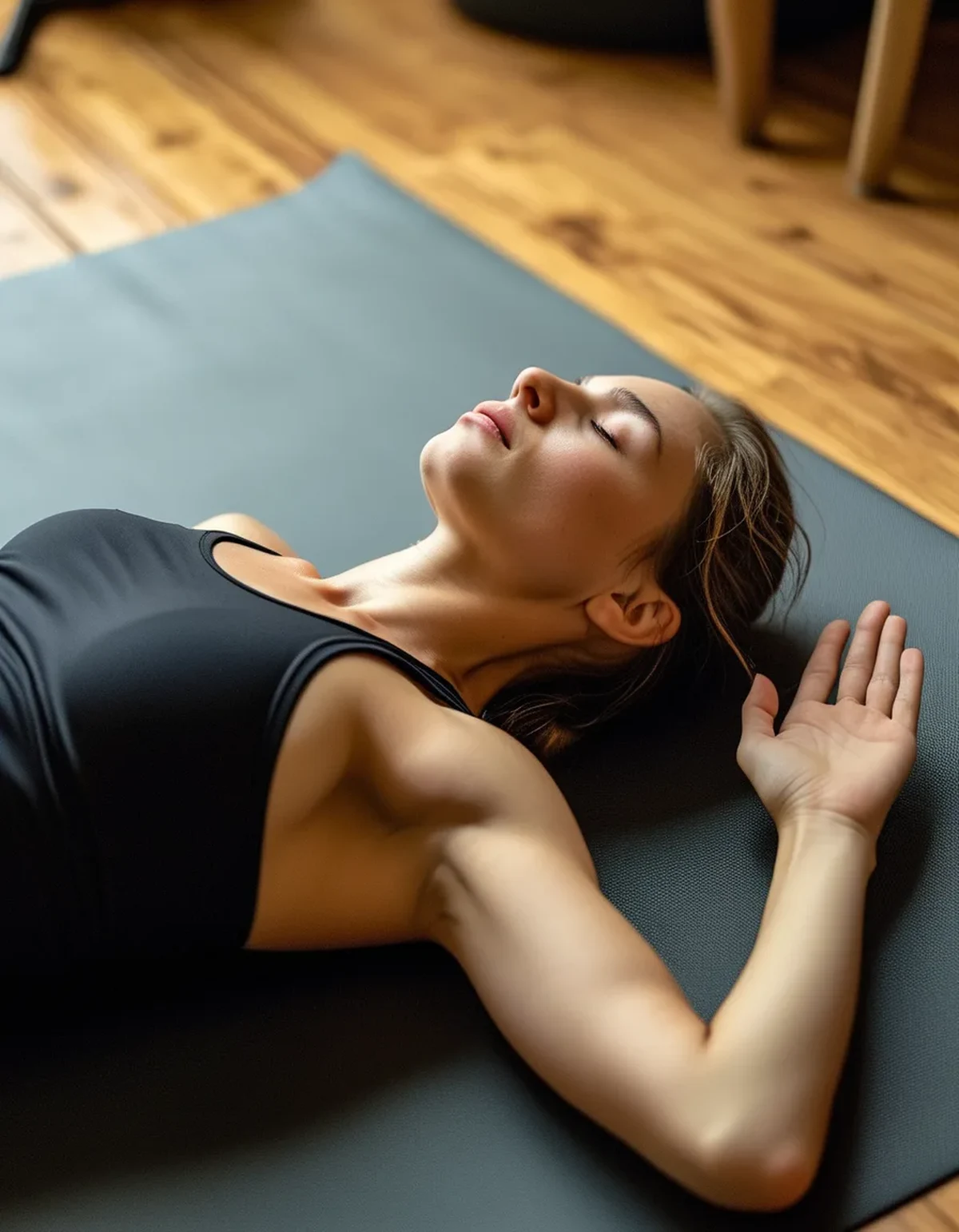
Hands-on-ribs sets, twice a day. Sitting or standing, hands wrapped on the lower side ribs, five breaths widening into the palms with the belly quiet. Thirty seconds each. This isolates the rib mechanics from the exercises so class stops being the only rehearsal space.
The band or waistband trick. A stretch band — or simply the firm waistband of high-waisted leggings — wrapped snugly at the lower ribs gives tactile feedback: inhale to press sideways into it, exhale to soften away. The gentle compression of a supportive waistband is exactly why so many people find the breath easier to locate in their pilates set than in loose pajamas; the fabric is a teacher. (A waistband so tight you cannot expand against it teaches the opposite lesson — snug, not clamped.)
Exhale-on-effort in daily life. Stairs, lifting groceries, standing from low chairs — exhale through the hard part. It installs the timing half of the skill in dozens of daily reps that never feel like practice.
The click itself is unmistakable in retrospect: exercises stop having a breathing part and a moving part. The hundred stops being a countdown and becomes rhythmic; teaser stops being a held-breath heave; neck and shoulder tension after class drops noticeably, because the chest-lifting muscles finally got fired from a job they were never meant to hold. Most people notice it between weeks three and six of twice-weekly practice — often mid-class, on an exercise that had been the enemy.
What Nobody Tells You About Breath in Class
Instructors cue the same breath five different ways. Breathe into your back pockets, umbrella ribs, smell the flowers blow out the candles — all describing lateral expansion and timed exhale. Collect the cues instead of choosing between them; different images unlock different bodies, and the one that works for you may arrive in month two from a substitute teacher.
Everyone holds their breath on teaser. And on roll-up, and on anything new. Breath-holding under novelty is a reflex with deep wiring; the win is noticing and resuming, not never holding. Even advanced practitioners are just faster noticers.
The audible exhale is functional, not performative. Sound requires an open throat and a genuinely moving diaphragm — a silent, polite exhale is often a held breath in disguise. Classes that sound like a tire deflating are doing it right.
Reverse-breathing an exercise is sometimes fine. The inhale-exhale mapping matters most where the exhale assists effort; some sequences (and some teachers) flip patterns deliberately. If the prescribed pattern of a particular exercise fights you after weeks, ask — there is often an accepted alternate.
The breath is why the clothes matter more than fashion admits. Buttery-soft leggings with a wide, even waistband support the rib-and-belly coordination; a rigid digging waistband or compressive shapewear actively blocks the lateral inhale you are there to learn. Dress for the breathing, and the aesthetics come along free.
FAQ: Pilates Breathing, Answered
Is lateral breathing supposed to replace belly breathing everywhere?
No — it is a tool for engaged-core work, not a life sentence. Belly breathing remains ideal for rest and downshifting. The goal is owning both and switching on purpose; most people arrive owning only one.
I get lightheaded during the hundred. What is wrong?
Usually over-breathing — pumping air faster than the effort needs, which drops carbon dioxide and brings the fizzy-headed feeling. Shrink the breath volume, slow the rhythm to five counts in and five out, and let the arms pump faster than the lungs. If it persists, pause and tell your instructor; lightheadedness is always worth flagging.
Should I breathe through my nose or mouth?
The common default is nose in, mouth out — the pursed-lip exhale adds a little engagement and audibility. Fully nasal works too and some teachers prefer it. Consistency and the timing matter; the orifice is negotiable.
Does the breathing carry over to anything outside Pilates?
Directly. The exhale-on-effort pattern is the same one taught for lifting, for pelvic floor pressure management, and for running cadence work — and lateral breathing is the standard fix for chest-breathing desk tension. It is arguably the most transferable single skill the method teaches.
TL;DR:
- Pilates breathing routes air sideways into the ribs because the belly route needs slack abs and the chest route feeds neck tension.
- It feels backwards because it overrides lifelong belly- or chest-breathing habits while dual-tasking — the clumsy phase is the rewiring, not failure.
- Accelerate the click with hands-on-ribs sets, waistband feedback, and exhale-on-effort in daily life; expect it between weeks three and six.
- Audible exhales are correct, breath-holds are universal and fixable, and a soft wide waistband genuinely helps the learning.
Do the thirty-second hands-on-ribs drill tonight and before your next class, and pick one exercise to keep the exhale honest on. The click is closer than the last four confusing classes suggest — and everything after it costs less.
See It in Motion
Seen here: Super High Waist Embossed Yoga Leggings with Inner Pocket — shop it on bubblelime.com
Keep Reading
This article is for general informational and styling purposes only. Fit, sizing, and product availability may vary.