The Pilates Ring: 5 Ways to Use the Prop Most People Ignore
Quick Answer: A Pilates ring (magic circle) adds resistance for inner-thigh, arm, and core work, and — less known — helps correct form by giving your body a tactile cue to press against, making exercises like bridges and rollups noticeably harder in a good way.
Most people buy a Pilates ring, do 10 minutes of inner-thigh squeezes, and forget it exists. That’s using maybe 20% of what the prop actually does.
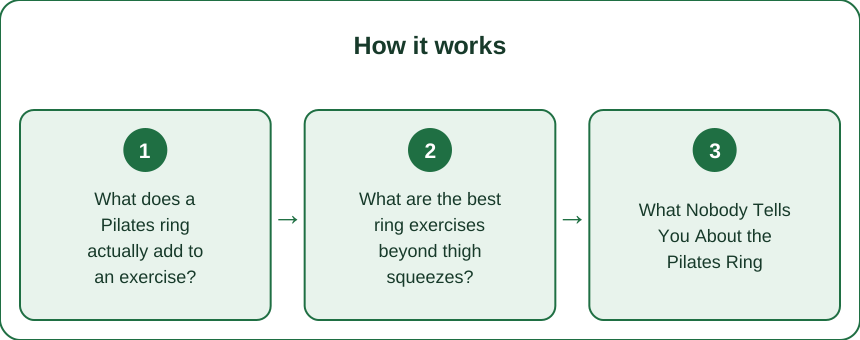
What does a Pilates ring actually add to an exercise?
The ring provides light, consistent resistance in a compressible range, which does two things: it engages muscles isometrically (holding tension without moving) and it gives you a tactile feedback point — your body has something concrete to press into, which often reveals form issues invisible in an unweighted version of the same move.
This is why a basic bridge feels notably different with the ring between your knees: the resistance forces your inner thighs and glutes to fire together instead of letting one compensate for the other.
What are the best ring exercises beyond thigh squeezes?
1. Bridge with ring between knees — adds inner-thigh and glute engagement to a standard glute bridge.
2. Seated chest press — hold the ring vertically between palms, press and release for 15-20 reps, works chest and triceps.
3. Rollup with ring overhead — holding light tension through the ring as you roll up adds an upper-body stability challenge to a classic ab move.
4. Standing side-leg press — ring around ankles, press outward against resistance for outer hip and glute medius work often missed in mat routines.
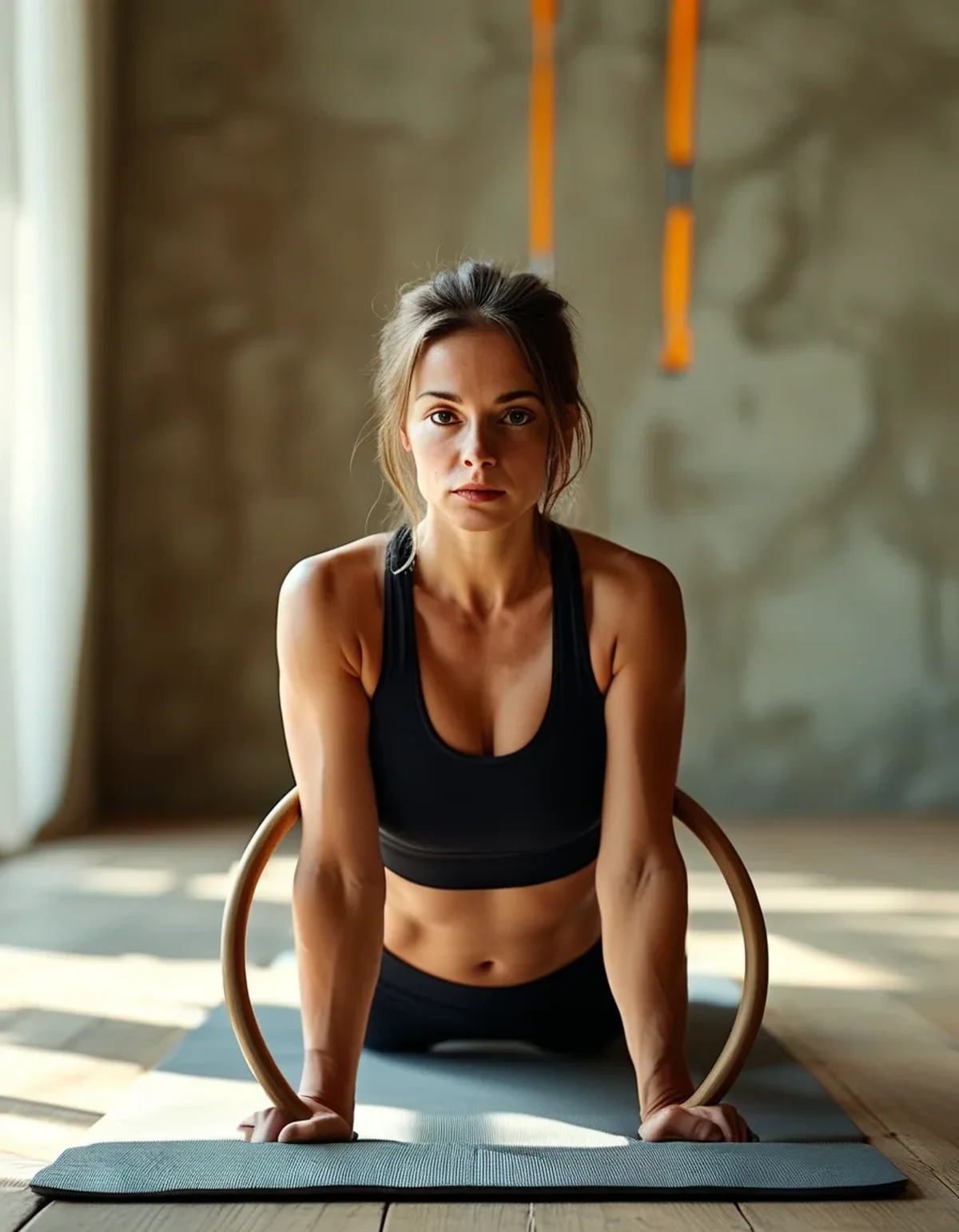
5. Plank with ring under palms — squeezing the ring while holding plank adds a chest and core anti-rotation challenge.
What Nobody Tells You About the Pilates Ring
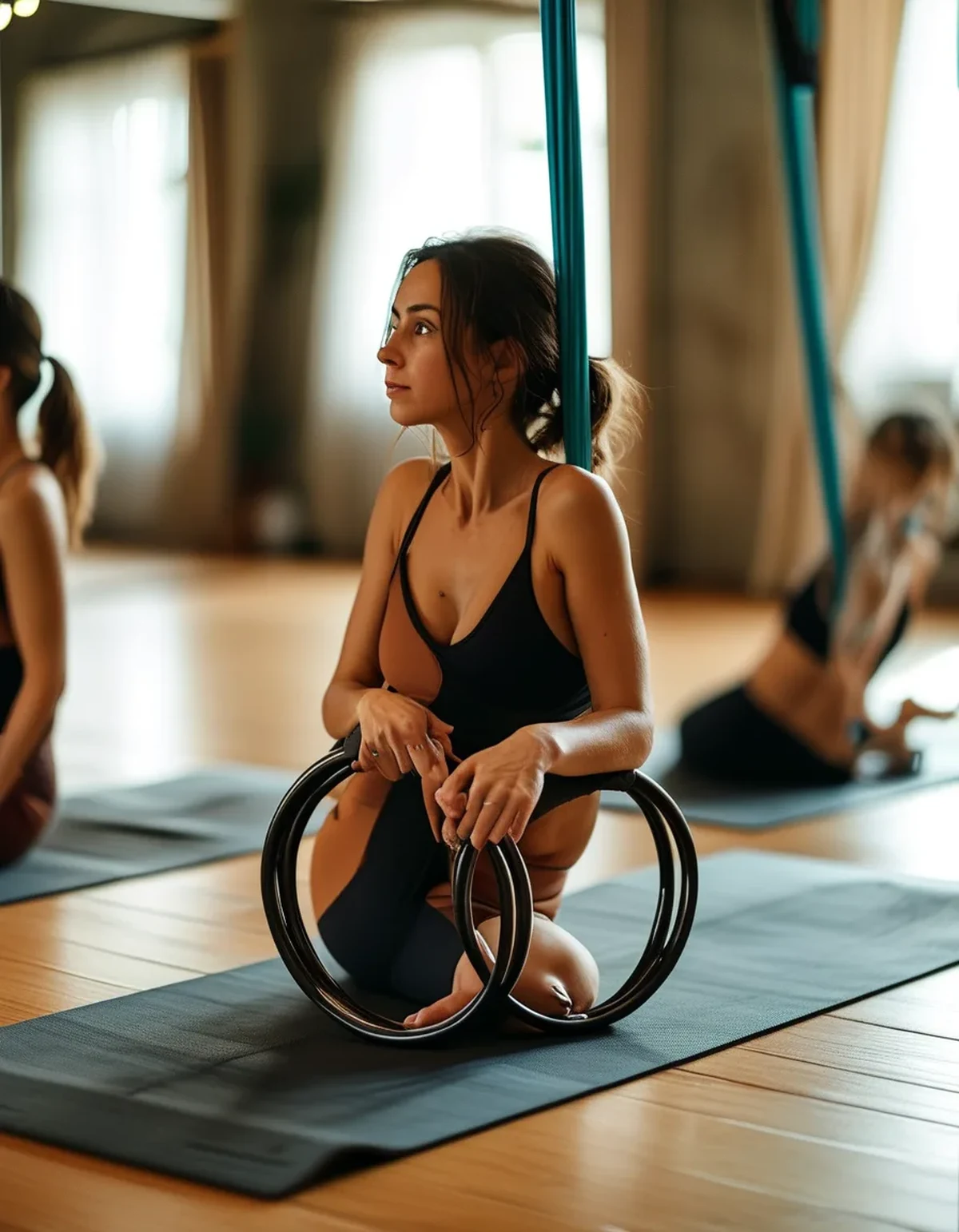
Here’s what most beginner guides skip: the ring’s real value is proprioceptive, not just resistance-based. Because it gives instant physical feedback when your form breaks down (the ring wobbles or you lose even pressure), it teaches control faster than an unweighted rep — many instructors use it specifically as a form-correction tool, not a strength tool.
If you’re relearning a move after time off, adding the ring can actually make progress faster, not just harder.
FAQ: Pilates Ring Questions, Answered
What resistance level should a beginner buy?
Light-to-medium resistance rings are more versatile for beginners — heavy rings are harder to control and can encourage compensating with bigger muscle groups instead of the small stabilizers Pilates targets.
Can the ring replace a full Pilates class?
No — it’s an accessory prop, not a complete system. It adds resistance and feedback to moves you already know, but doesn’t teach sequencing or breathing on its own.
How often should I use the ring in a routine?
2-3 times a week integrated into your existing mat work is plenty; it’s meant to enhance specific moves, not replace your whole session.
TL;DR:
- The ring adds resistance AND tactile form feedback, not just squeeze-based resistance
- Try it beyond thighs — chest press, rollups, planks, and side-leg presses all benefit
- It’s especially useful as a form-correction tool when relearning a move
- Light-to-medium resistance is more versatile than heavy for most beginners
Next mat session, grab the ring for your plank instead of your thighs and feel the difference.
See It in Motion
Seen here: High Waist Yoga Leggings with Side Pockets — shop it on bubblelime.com
Keep Reading
This article is for general informational and styling purposes only. Fit, sizing, and product availability may vary.