Neck Pain During Pilates Ab Work Isn't Normal — It's a Form Signal
Quick Answer: Neck strain during Pilates ab work means your neck muscles are doing the lifting your deep abs should — caused by chin-jutting, pulling the head with the eyes, or a curl that starts from the head instead of the ribs. The fix stack: eyes to your knees (not the ceiling), a fist of space under your chin, curl by sliding ribs toward hips, exhale on the lift — and use head-down modifications until the pattern rebuilds. Persistent pain beyond form fixes deserves professional eyes. This is general information, not medical advice.
‘The hundred’ is supposed to torch your abs. If it torches your neck instead — and you’ve been assuming that’s just part of it — you’ve been strength-training your neck flexors for months while your abs supervised.

Why does the neck take over in curl-ups?
Because your body always routes work to whatever will do it, and the neck volunteers under three conditions:
- The head leads the curl: lifting chin-first tells the neck flexors to hoist the head (8-12 lbs of bowling ball) as an isolated load, instead of the head riding on a trunk that curls from the ribs.
- Deep abs late to the party: if the transversus and obliques aren’t pre-engaged before liftoff, the first inch of every rep belongs to the neck by default — and the first inch sets the pattern for the set.
- Eyes to the ceiling: gaze drives head position; ceiling-gazing drops the head back mid-curl, forcing the neck to fight both gravity and direction.
The tell-tale distribution: form-driven neck strain shows up as front-of-neck fatigue and next-day tightness while abs feel undertrained. That’s not a weak neck needing toughening — it’s a miscast neck doing a role it was never hired for.
What’s the fix stack, cue by cue?
Layer these — most people’s strain resolves within two sessions:
- Set gaze first: eyes on your knees (or thigh-line) throughout — where the eyes go, the head follows, and knee-gaze keeps the head in the curl’s arc.
- The fist of space: a fist-width gap between chin and chest, held constant — no jutting, no chin-to-chest crush. Imagine holding a peach you must neither drop nor bite.
- Curl from the ribs: initiate by sliding the bottom ribs toward the hip bones — the head and shoulders ride the trunk’s curl, arriving airborne without ever lifting themselves.
- Exhale on the lift: the exhale recruits deep abdominals automatically (Pilates breathing exists precisely for this) — inhale to prepare, exhale as you curl, and the right muscles clock in before the neck can.
- Hands as scaffolding, honestly: one hand behind the head (elbow wide, hand supporting not pulling) while the pattern rebuilds — swapping sides each set. Interlaced-hands-yanking is the old pattern wearing a helper costume.
And the modification menu: head stays down for the hundred (legs and arms pump, abs brace — full core work, zero neck load) until curls feel ab-driven; then progress to short holds, then full reps.
Myth vs Fact: Pilates Neck Edition
Myth: Neck fatigue during ab work means your neck is weak and needs it. Fact: The neck flexors get plenty of appropriate work in life and in Pilates done right — burning-neck ab sets are miscasting, not conditioning. Train abs with abs; the neck has its own gentle repertoire.
Myth: Push through — it goes away as you get stronger. Fact: It goes away as you get stronger in the wrong muscles — the strain plateaus while the pattern entrenches. Two sessions of form fixes beat two months of adaptation to a bad habit.
Myth: Head-down modifications are the beginner table. Fact: Instructors use head-down variations deliberately at every level — a braced head-down hundred with full breath work is a legitimate, spine-friendly expression of the exercise, and some bodies (certain neck histories, osteoporosis considerations) are best served staying there. Modification is programming, not demotion.
The professional line: strain that persists despite the fix stack, pain that’s sharp or radiates into the arm, tingling, or a history of neck injury — that’s assessment territory (physio or a well-qualified instructor watching you in person), not more cueing. This is general information, not medical advice.
FAQ: Pilates Neck Strain Questions, Answered
How long until curl-ups stop bothering my neck?
With the fix stack and honest modifications: most feel the load shift to abs within 1-2 sessions, with the pattern automatic in 2-4 weeks. The speed comes from it being a habit change, not a strength deficit.
Should I do neck-strengthening exercises too?
Gentle neck endurance work (chin nods, head lifts done as neck exercises, briefly) is reasonable and sometimes assigned — but it’s a supplement, not the solution. The curl-up fix is form; adding neck training to survive bad form is armoring the wrong door.
Does this apply to crunches and ab work outside Pilates?
Completely — the head-leads-curl error and its fix stack (gaze, chin space, rib-slide, exhale) are universal to flexion ab work. Pilates just notices it sooner because the reps are slower and the sets are longer — the same neck that hides in fast crunches gets caught by the hundred.
TL;DR:
- Neck burn during ab work = the neck lifting the head as cargo instead of riding a rib-initiated curl
- Fix stack: eyes to knees, fist of chin space, curl from the ribs, exhale on the lift, supportive (not pulling) hand
- Head-down hundred is legitimate programming, not the kids’ table — progress out when abs lead
- Sharp, radiating, or persistent symptoms: get assessed in person
The hundred was always an ab exercise — your neck just kept volunteering for overtime nobody assigned. This is general information, not medical advice.
See It in Motion
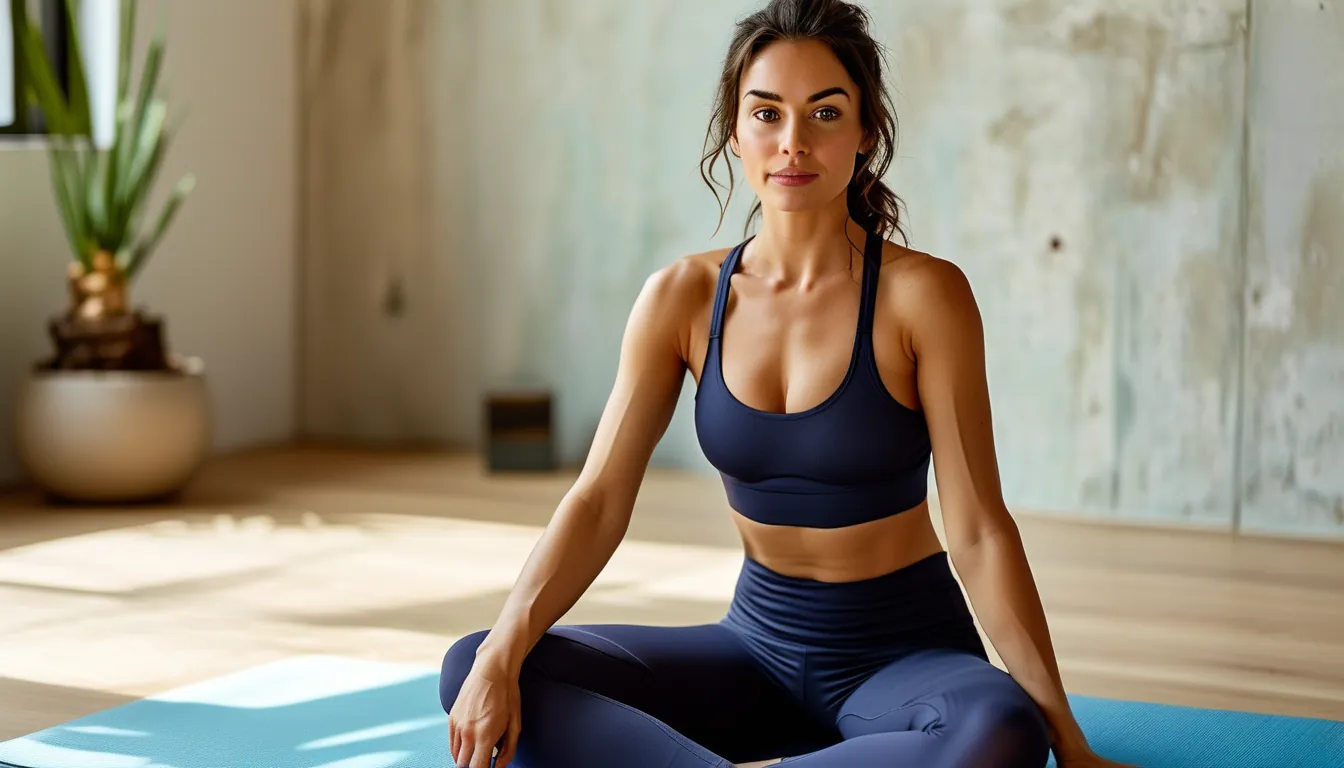
Seen here: High Waist Embossed Yoga Leggings with Side Pockets — shop it on bubblelime.com
Keep Reading
This article is for general informational and styling purposes only. Fit, sizing, and product availability may vary.