Pilates Breathing: The Basics That Change Everything
Quick Answer: Pilates uses lateral breathing — inhale wide into the ribs rather than down into the belly, then exhale to knit the ribs down and in. Always exhale on the hardest part of the movement, which naturally deepens deep-core engagement and stabilizes the spine before your limbs move. Practice 30 seconds of rib breathing at your desk daily and it shows up in class within two weeks.
Your instructor has cued the breath forty times this class. “Inhale to prepare… exhale to curl…”
And you’ve ignored every one of them, because you’re busy trying to survive the exercise.
Here’s the uncomfortable part: the breathing isn’t garnish on the method. It is the method. And most of the reason your teaser isn’t working is sitting right there in the cue you’ve been skipping.
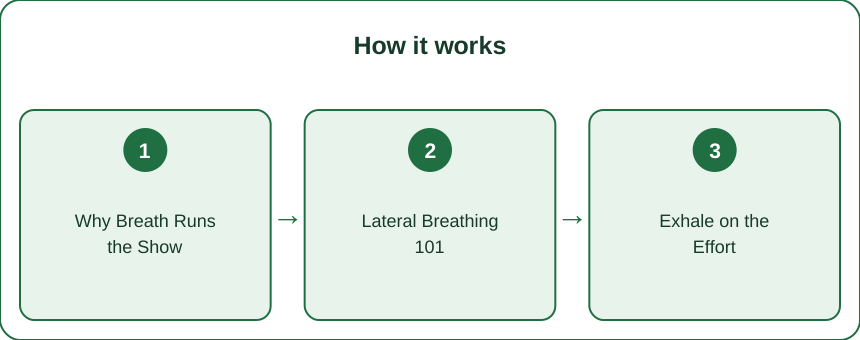
Why Is Breathing So Important in Pilates?
Because the exhale is what turns your deep core on.
Your transverse abdominis — the deepest abdominal layer, wrapping around your torso like a corset — contracts naturally on a forceful exhale. So does your pelvic floor. That pairing is the spinal stabilization system Pilates is built around.
The sequence matters. Brace, then move. When you exhale into the effort, your spine is stabilized before your limbs load it. When you hold your breath instead — which is what almost everyone does under strain — you get a rigid, pressurized brace that spikes blood pressure and teaches nothing.
There’s a second reason. Breath-holding is how people muscle through exercises they can’t yet control. If you can’t maintain the breathing pattern, the exercise is too hard for you right now — the breath is an honesty meter as well as an engine.
Get the breath, get the method. Everything else in Pilates is downstream of this.
What Is Lateral Breathing and How Do You Do It?
Lateral (or costal) breathing sends the inhale sideways into the rib cage rather than down into the belly.
Belly breathing — excellent for relaxation and meditation — pushes the abdominal wall outward, which releases exactly the deep-core engagement Pilates wants maintained throughout. So Pilates uses a different pattern.
Learn it with your hands:
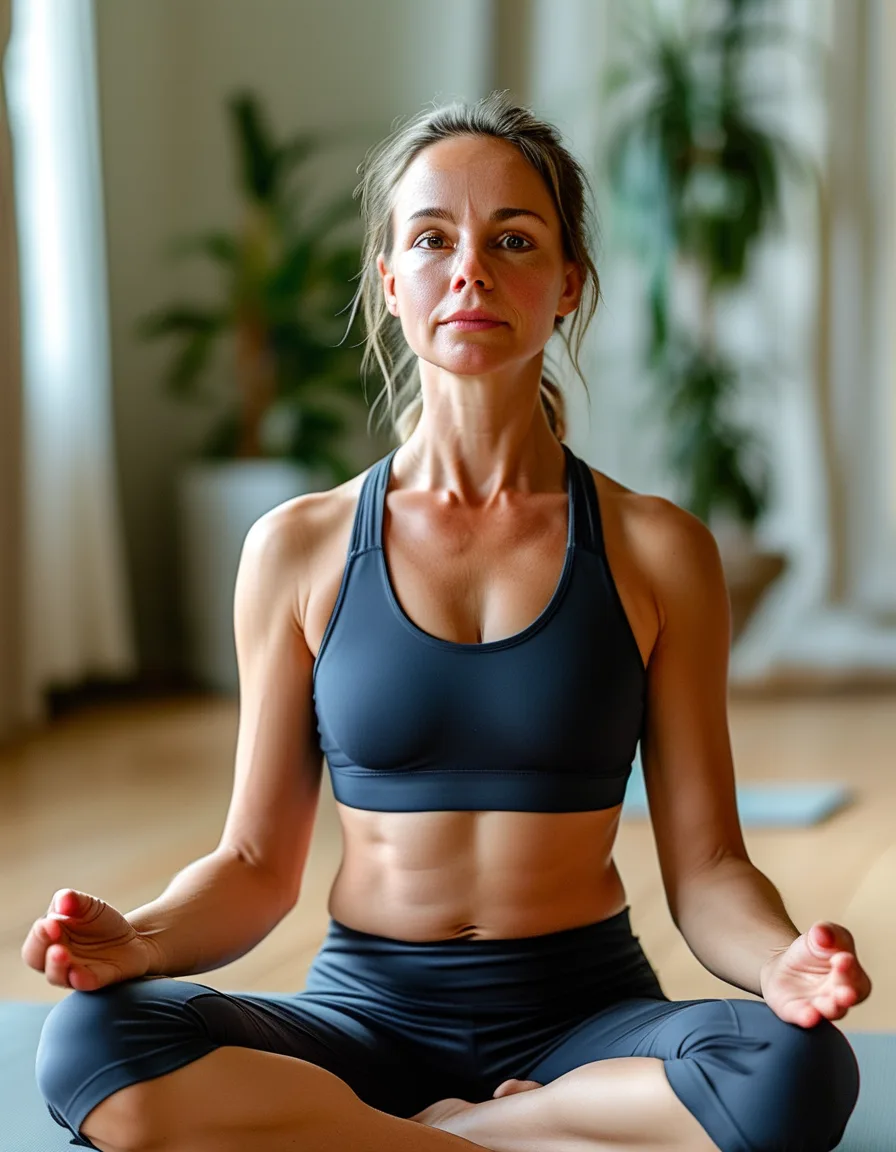
- Sit or stand tall. Wrap your hands around your lower ribs, thumbs behind, fingers on the sides.
- Inhale through your nose for 4 counts. Aim to push your hands apart sideways. Your belly should stay relatively quiet.
- Exhale through pursed lips for 6 counts. Feel the ribs knit down and in, like closing an umbrella.
- At the end of the exhale, notice the deep abdominal tightening that happens on its own. That’s the transverse abdominis. That’s the whole point.
Dose: 10 breaths, once or twice daily.
If nothing moves sideways, lie on your back with a light book on your belly. The book should stay still while your side ribs expand. That feedback fixes it for most people in a few sessions.
That rib motion is the skill. Everything else is application.
When Should You Exhale During a Pilates Exercise?
On the effort. Every time. This is the golden rule and it covers about 90% of cases.
- The Hundred: exhale on the 5 percussive pumps, inhale on the next 5.
- Roll-up: exhale as you curl up, inhale at the top, exhale as you roll down with control.
- Single-leg stretch: exhale as the leg extends away.
- Teaser: exhale on the lift, inhale to hold, exhale to lower.
- Plank variations: exhale on the movement, inhale on the return.
The reasoning is simple: the exhale deepens your abdominal engagement, so you want that engagement at the moment the load is highest.
The exception worth knowing: some spinal extension work (swan, swimming) reverses this and cues an inhale on the lift, because you’re expanding the front of the body rather than flexing it. Your instructor will tell you. Don’t overthink it.
Effort and exhale are dance partners.
The 5 Mistakes Everyone Makes With Pilates Breathing
- Holding the breath entirely. The default under strain. If you notice you’ve stopped breathing, the exercise is above your current level — regress it rather than powering through.
- Belly breathing in class. It’s the right pattern for yoga nidra and the wrong one here. It releases the deep core exactly when you need it engaged.
- Shallow chest breathing with lifted shoulders. If your shoulders rise toward your ears on the inhale, you’re using accessory neck muscles instead of your ribs. Hands on ribs, shoulders heavy.
- Rushing the exhale. The exhale should be longer than the inhale — a 4-count in and 6-count out. A short exhale never reaches the deep engagement.
- Trying to learn it mid-exercise. This is the one that keeps people stuck for years. You cannot learn a new breathing pattern while also learning a new movement. Practice the breath separately, off the mat, and it arrives in class already installed.
How Do You Practice Pilates Breathing Off the Mat?
Thirty seconds at a time, in the gaps of your day.
Red lights. Hands on the wheel, ribs expanding sideways. Inhale 4, exhale 6. Two or three cycles per light.
At your desk. Once an hour, sit tall and take five lateral breaths. It doubles as a posture reset and nobody can tell you’re doing it.
Before bed. Lying on your back, knees bent, hands on ribs. Ten breaths. This is also genuinely calming, so it earns its place twice.
Total daily investment: about two minutes. And it builds the pattern far faster than an hour of trying to think about it during class, because you’re only learning one thing at a time.
One day mid-Hundred, you’ll notice the rhythm carrying you — breath timing the reps, core firing without instruction. That’s the method working as designed. The breathing was never extra credit. It was the credit.
Frequently Asked Questions
Should you breathe through your nose or mouth in Pilates?
Traditionally, inhale through the nose and exhale through the mouth with slightly pursed lips. The nasal inhale encourages a slower, deeper breath, while the pursed-lip exhale helps you control the length and feel the ribs closing. Nose-only breathing is fine too if that’s more comfortable.
Why do I get dizzy during Pilates breathing?
Usually over-breathing — inhaling too deeply or too rapidly, which lowers carbon dioxide levels. Slow the whole pattern down, make the exhale longer than the inhale, and don’t force the inhale to maximum capacity. If dizziness persists across sessions, mention it to your instructor and your doctor.
Is Pilates breathing the same as diaphragmatic breathing?
Not quite. Both use the diaphragm, but diaphragmatic (belly) breathing lets the abdominal wall expand outward, while Pilates lateral breathing directs expansion sideways into the ribs to keep the deep core engaged. They’re different tools for different purposes — both are worth having.
How long does it take to learn Pilates breathing?
Most people can produce the rib expansion within one focused session with hands-on ribs. Making it automatic during exercise typically takes 3–6 weeks of short daily practice off the mat, which is much faster than trying to acquire it only during class.
When to Check With a Professional
If you have asthma, COPD, or another respiratory condition, talk to your doctor or a respiratory physio before adopting a new breathing pattern — some cueing suits certain conditions better than others. Anyone who is pregnant, recently postpartum, or managing diastasis recti or pelvic floor symptoms should work with an instructor trained in that specialty, since the standard deep-core cueing is often modified in those cases.
TL;DR:
- The exhale switches on your transverse abdominis and pelvic floor — that’s the spinal stabilization Pilates is built on.
- Lateral breathing: inhale wide into the ribs (4 counts), exhale to knit them down and in (6 counts). Belly stays quiet.
- Exhale on the effort. The Hundred, roll-up, teaser — the hard part gets the exhale.
- If you can’t hold the breathing pattern, the exercise is too hard. Regress it.
- Practice 30 seconds at red lights and at your desk. Learn the breath off the mat, not during class.
See It in Motion
Seen here: High Waist Bootcut Yoga Pants with Pockets — shop it on bubblelime.com
Keep Reading
This article is for general informational and styling purposes only. Fit, sizing, and product availability may vary.