How Pilates Improves Your Posture
You catch yourself slumping at a red light, or your lower back aches by 3pm even though you haven’t done anything strenuous. If that sounds familiar, Pilates might be exactly what you need. With its focus on core strength, alignment, and body awareness, it’s one of the very best practices for improving posture and helping you stand tall.
Quick Answer: Pilates improves posture by strengthening your deep core muscles, teaching body alignment awareness, rebalancing tight and weak muscle groups, and improving spinal mobility. Most people notice a subtle difference within 3-4 weeks of practicing 2-3 times a week, with more visible changes by 8-12 weeks. It’s not an overnight fix, but it addresses the actual root causes behind slumping and rounded shoulders.

Why Does Pilates Work So Well for Posture?
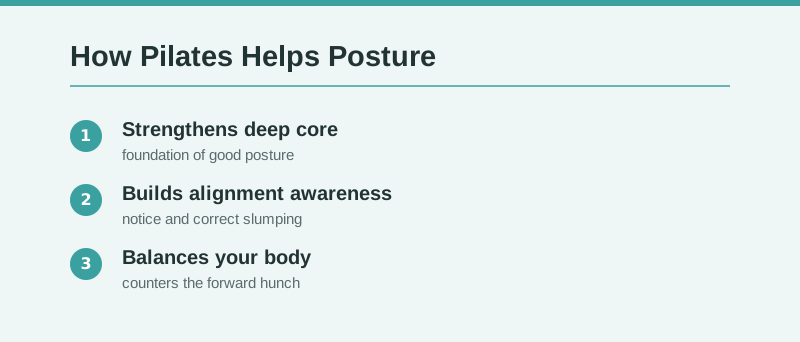
Good posture rests on a strong core, and that’s Pilates’ specialty. Pilates builds the deep core muscles — the ones that support your spine and hold you upright — by targeting them directly and repeatedly, rather than as an afterthought the way many workouts do. A strong, engaged core is the foundation of good posture; it’s what keeps you from slumping and supports an upright, aligned position.
By systematically strengthening these deep stabilizing muscles over 6-8 weeks, Pilates addresses one of the root causes of poor posture, giving you the actual strength needed to stand and sit tall without constantly reminding yourself to do it.
How Does Pilates Build Alignment Awareness?
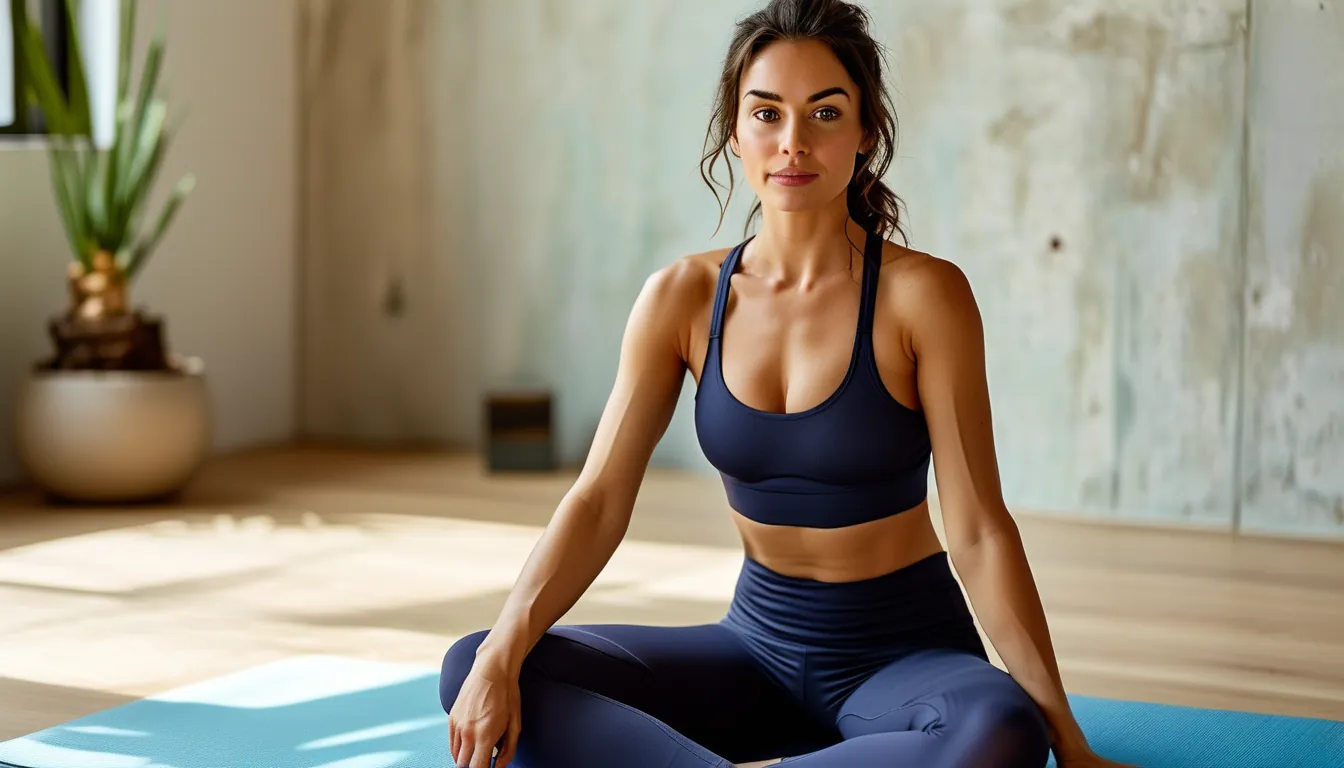
Pilates teaches you to move with proper alignment and heightened body awareness — you become far more conscious of how you’re holding yourself, both on the mat and off it. This awareness carries directly into daily life, helping you notice when you’re slumping at your desk or in the car, and correct it before it becomes an hour-long habit.
So much poor posture is simply unconscious habit, not a structural problem, and Pilates’ constant emphasis on alignment retrains that habit session by session. That growing awareness of your own body position is a genuinely powerful, lasting tool for maintaining good posture well beyond the studio.
Can Pilates Fix a Muscle Imbalance Behind Rounded Shoulders?
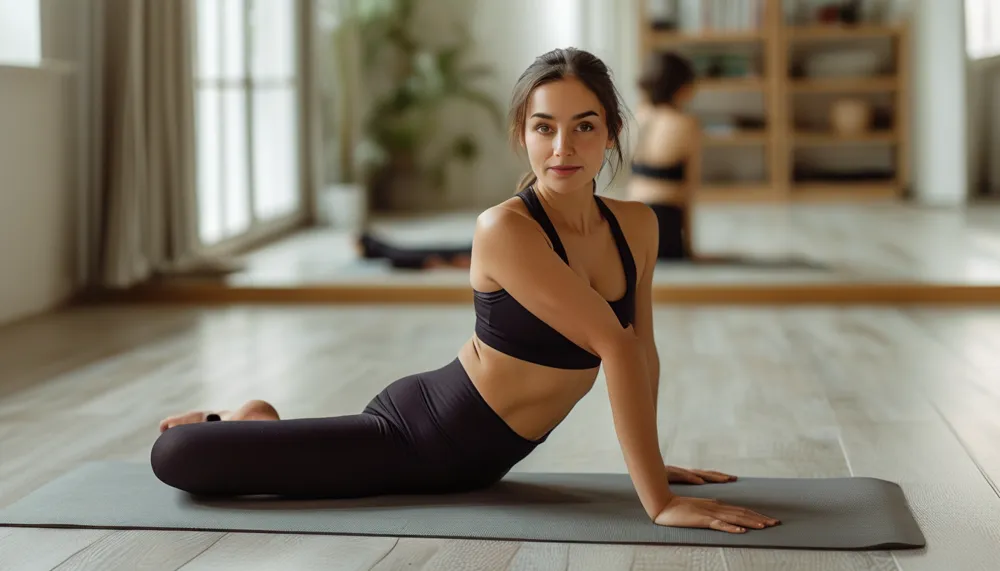
Modern life tends to tighten some muscles (like the chest) and weaken others (like the upper back), pulling you into a rounded, forward posture. Pilates counters this directly by strengthening the back and core while lengthening tight areas at the same time, restoring balance to your body in a single session rather than treating each side separately.
This rebalancing directly addresses the muscular imbalance behind poor posture, helping you stand naturally taller and more openly. It’s a corrective, restorative practice that undoes many of the postural effects of desk-bound days — think of it as hitting reset on hours of hunching.
Does Pilates Really Improve Spinal Mobility?
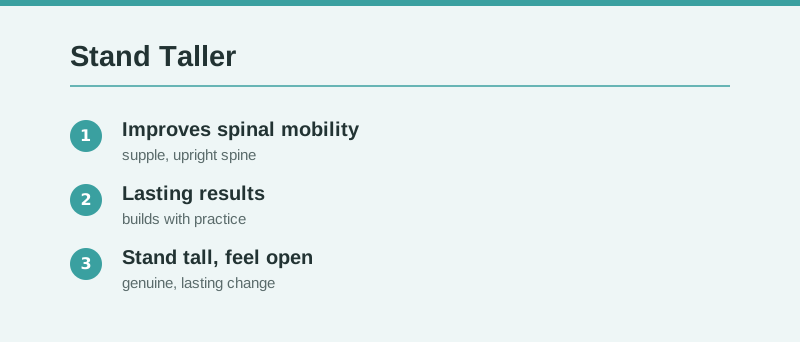
Pilates includes controlled, articulating movements — like rolling through your spine one vertebra at a time — that improve mobility and flexibility throughout your back. A supple, mobile spine moves and holds itself better than a stiff one, which contributes directly to healthier posture and easier day-to-day movement.
By keeping your spine mobile and strong at once, Pilates helps you maintain a comfortable, upright position rather than becoming stiff and hunched over time. This combination of spinal mobility and core strength is a big part of why Pilates is so effective for posture specifically, compared to workouts that focus on strength alone.
How Often Should You Practice Pilates for Posture Results?
Like any postural improvement, Pilates benefits build with consistent practice, not one-off sessions. Aim for:
- 2-3 sessions a week for noticeable core and alignment gains.
- 20-30 minutes per session is enough if you’re consistent.
- 6-8 weeks before you see real, visible postural change.
Regular sessions steadily strengthen your core, deepen your body awareness, and rebalance your muscles — and over the weeks you’ll genuinely notice yourself standing taller and feeling more comfortable in your own body.
5 Mistakes Everyone Makes When Using Pilates for Posture
- Doing it once a week and expecting fast results. Consistency, not intensity, drives the postural change here.
- Skipping the breathing cues. Pilates breathing engages the deep core muscles that actually stabilize your spine — skip it and you lose half the benefit.
- Choosing only mat work, never equipment. Reformer Pilates adds resistance that can accelerate strength gains for some people.
- Ignoring posture between sessions. The awareness has to carry over into your desk chair and your car seat, or progress stalls.
- Comparing your flexibility to an instructor’s. This one surprises even longtime students — your spine’s mobility is individual, and pushing too hard, too soon, can cause more harm than good.
Mini FAQ
How long does it take for Pilates to improve posture?
Most people notice a subtle difference within 3-4 weeks of practicing 2-3 times a week, with more visible, lasting change by 8-12 weeks. Since poor posture usually develops over months or years, give the process real time rather than judging it after one class.
Is mat Pilates or reformer Pilates better for posture?
Both work well — mat Pilates uses bodyweight and is easy to start at home, while reformer Pilates adds spring-based resistance that some people find speeds up strength gains. Either one, done consistently, addresses the same core and alignment issues behind poor posture.
Can Pilates help with an already-existing back problem?
Pilates is widely used to support general back health and posture, but if you have a diagnosed spine condition, chronic pain, or a recent injury, check with a doctor or physical therapist before starting. A qualified instructor can also modify moves so they suit your specific situation safely.
TL;DR
- Pilates strengthens your deep core, the actual foundation of good posture.
- It builds alignment awareness that carries into your daily life, not just the studio.
- It rebalances the tight-chest, weak-back pattern that causes rounded shoulders.
- Better spinal mobility means less stiffness and easier upright movement.
- Practice 2-3 times a week for 6-8 weeks to see real, lasting change.
- See a doctor or physical therapist first if you have an existing back condition or injury.
Pilates improves your posture by strengthening your deep core, building alignment awareness, balancing your body, improving spinal mobility, and delivering lasting results with regular practice. Practice consistently, and you’ll notice yourself standing taller, feeling more open, and moving more comfortably — a genuine, lasting improvement.
See It in Motion
Seen here: High Waist Yoga Leggings with Inner Pocket — shop it on bubblelime.com
Keep Reading
This article is for general informational and styling purposes only. Fit, sizing, and product availability may vary.