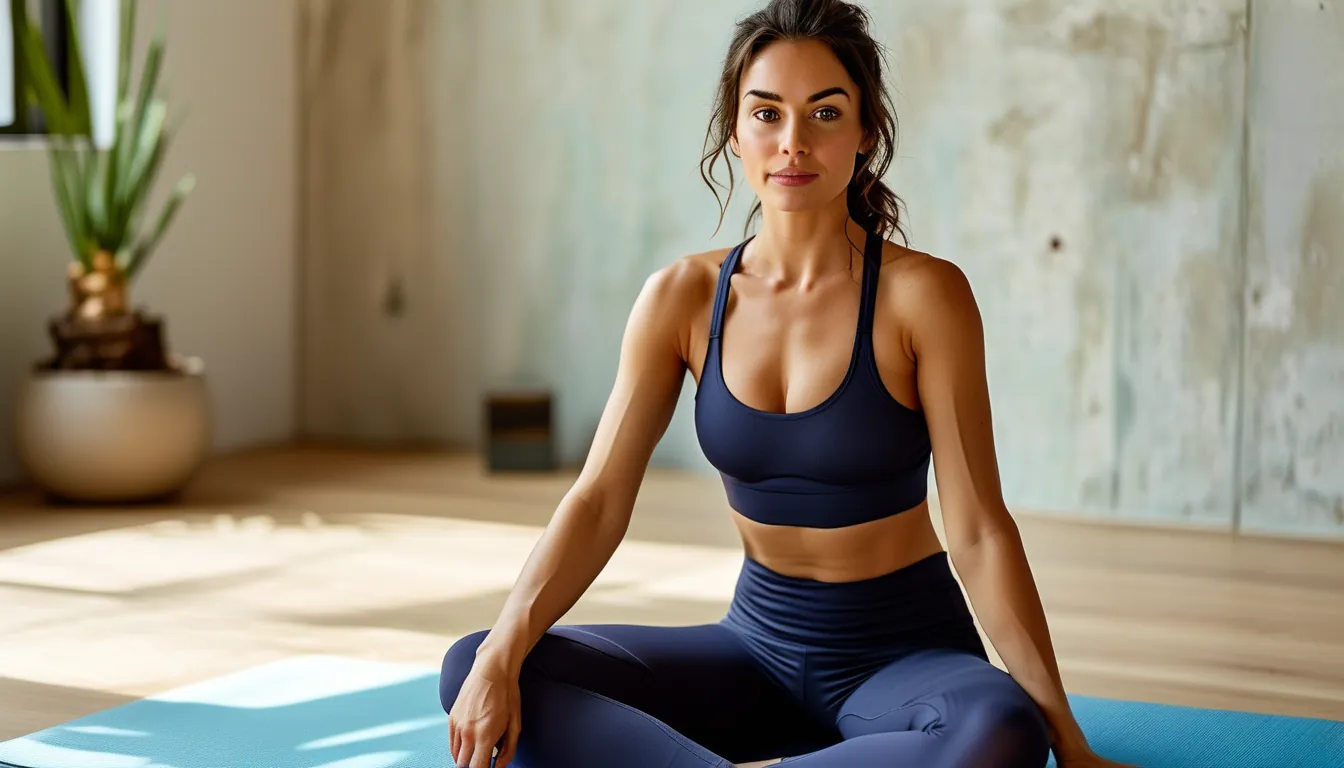
8 Pilates Corrections That Fix More Than the Exercise They Appear In
Quick Answer: The corrections that carry across a whole class are the ones that change your foundation rather than your shape: rib position, breath timing, neck length, pelvic position, foot pressure, shoulder blade placement, jaw and hand tension, and range control. Fix any one of these and the exercises that follow become easier and more effective without any change to the exercises themselves. Most people are working on the shape of individual moves when the foundation is what is limiting them.
Here are the eight, in the order they tend to matter, with what each one actually changes.
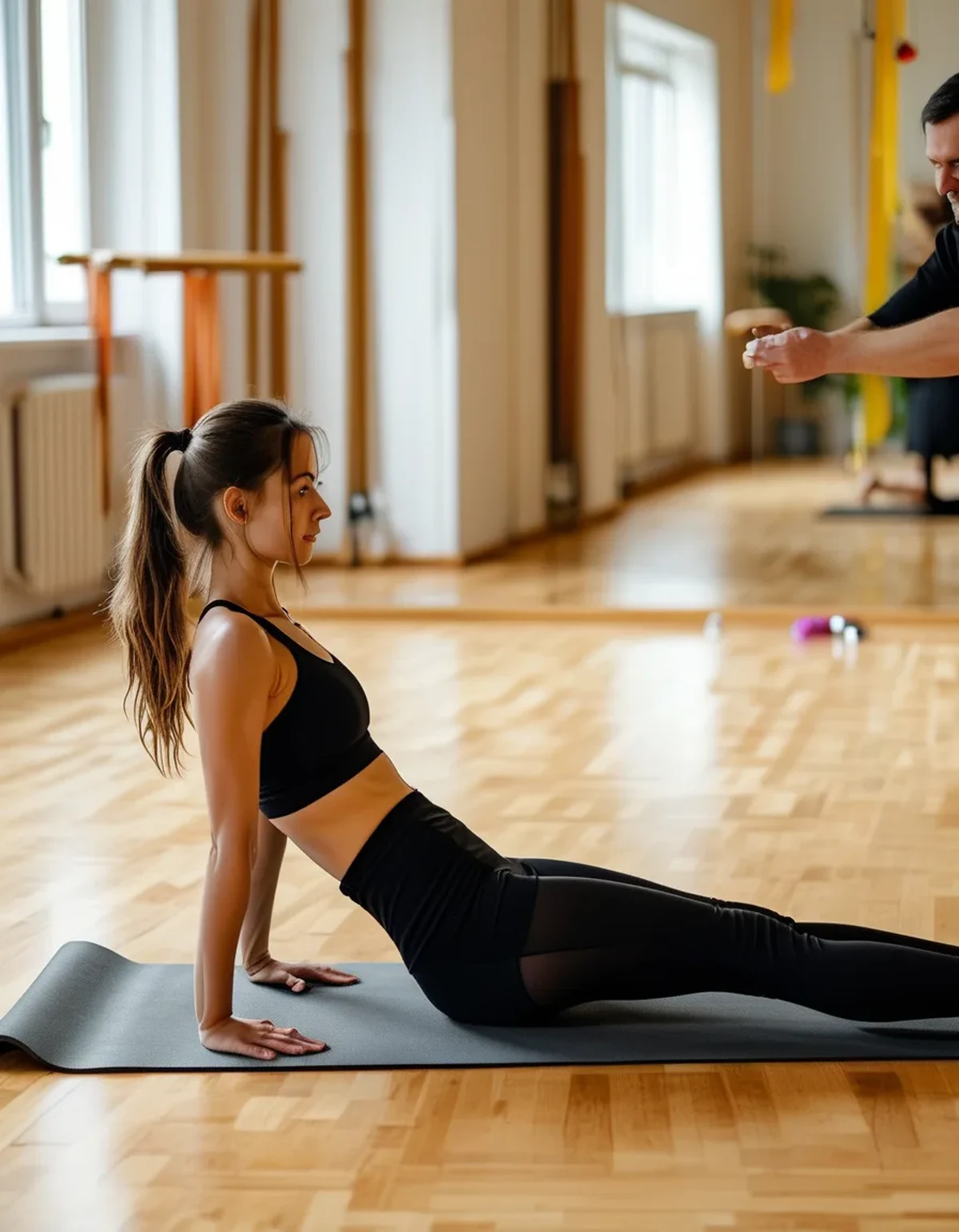
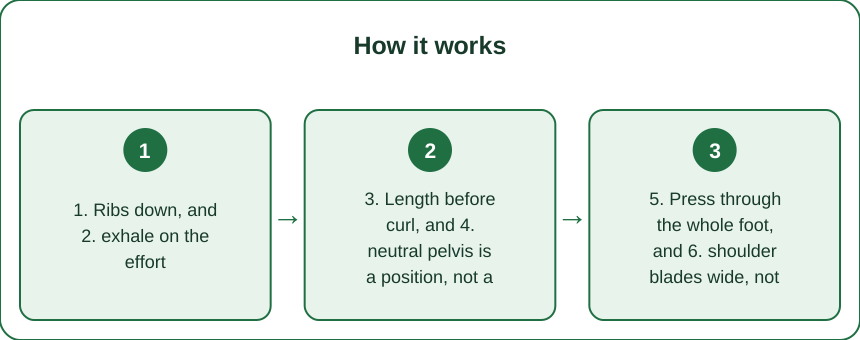
1. Ribs down, and 2. exhale on the effort
1. Ribs down
Flared ribs are the most common and most consequential fault in mat pilates. When the lower ribs lift and splay, the abdominal wall lengthens and loses its ability to generate tension, and the lower back extends to compensate.
The correction is to think of the front of the lower ribs knitting down toward the hips, without gripping or holding the breath. You should be able to breathe normally in the corrected position — if you cannot, you have over-corrected into a rigid brace.
This fixes roll-ups, hundreds, leg lowers, planks, and every overhead arm position in one adjustment. It is the highest-leverage correction available.
2. Exhale on the effort
Pilates breathing is often taught as a pattern to memorize. The functional version is simpler: exhale during the hardest part of the movement.
Exhaling naturally draws the ribcage down and increases abdominal engagement. It is the breath that produces the rib position from the first correction, automatically.
Holding the breath does the opposite — it pressurizes the trunk in a way that feels stable but blocks the deeper, more useful engagement, and it raises blood pressure unnecessarily. If you notice you have stopped breathing, that is almost always the moment the exercise stopped working.
3. Length before curl, and 4. neutral pelvis is a position, not a feeling
3. Length before curl
In any flexion exercise — roll-up, chest lift, hundred — the instruction most people follow is to curl higher. The correction is to lengthen through the spine first, then curl.
Curling without lengthening compresses the front of the body and produces the neck strain that so many people report. Lengthening first creates space, and the curl happens through a longer spine with the abdominals working through a larger range.
The practical cue: imagine sliding the back of your head away from your tailbone before you lift. The height you achieve will be lower and the exercise will be considerably harder, which is the point.
4. Neutral pelvis is a position, not a feeling
Neutral pelvis is usually cued as a sensation, which is why people get it wrong for years. It is a specific alignment: the pubic bone and the two front hip bones sit in the same plane.
Lying down, check it with your hands — one on the pubic bone, two on the hip points. If the pubic bone is higher, you are tucked. If lower, you are arched.
Most people carry a habitual tuck or arch and perceive it as neutral because it is familiar. Checking with your hands once, at the start of a session, recalibrates everything that follows.
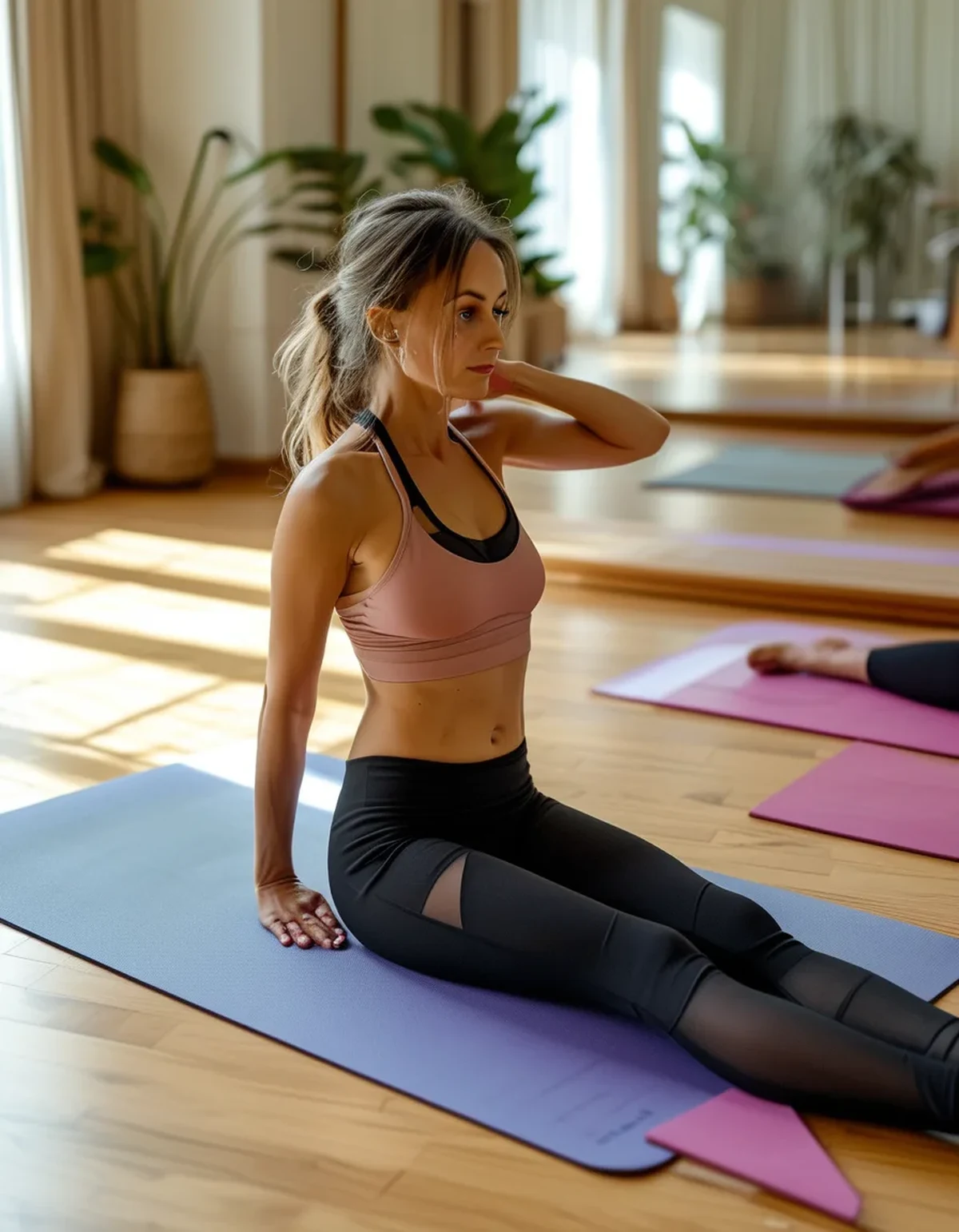
5. Press through the whole foot, and 6. shoulder blades wide, not squeezed
5. Press through the whole foot
In any standing or footwork exercise, pressure distribution through the foot determines how the entire leg loads. Most people push through the ball of the foot or the inside edge, which internally rotates the leg and shifts work from the glutes to the quads.
The target is a tripod: the base of the big toe, the base of the little toe, and the center of the heel, all in contact with even pressure. This one change alters hip position, knee tracking, and glute engagement simultaneously.
It matters on the reformer too. Foot placement on the bar decides which muscles do the work, and a foot that rolls inward under load quietly turns a glute exercise into a quad exercise.
6. Shoulder blades wide, not squeezed
The instruction to pull the shoulders back gets over-applied. Squeezing the shoulder blades together tightens the upper back and prevents the serratus from doing its job of holding the blade against the ribcage.
The better cue is wide and down — imagine the blades spreading apart and sliding into the back pockets. This produces a stable, mobile shoulder rather than a locked one, and it is what makes planks, push-ups, and any arm-supported position sustainable.
7. Unclench the jaw and hands, and 8. control the return
7. Unclench the jaw and hands
This sounds like a relaxation tip and it is actually a mechanical one. Jaw clenching and hand gripping are both signs of overflow tension — the nervous system recruiting muscles that have nothing to do with the task because the effort has exceeded what the intended muscles can produce.
When you notice a clenched jaw, it usually means the exercise is currently too hard, or you are compensating. Deliberately softening the jaw and the hands often causes the target muscle to engage more, not less, because the effort is redirected.
It is also the fastest way to spot your own limit. The rep where your jaw tightens is roughly the rep where your form left you.
8. Control the return
Almost everyone performs the concentric phase — the lifting, the curling — with attention, and lets the return happen. The return is where most of the available strength gain lives.
Take the same count on the way back as on the way out, or longer. A roll-up that takes three counts up and one count down is half an exercise. Three counts each way is a completely different demand.
This correction is the one that most reliably makes an unchanged class feel harder, which is exactly what you want when the routine has stopped producing change.
Which should you work on first?
Ribs down and exhale on effort, together. They reinforce each other, and between them they change the foundation of nearly every mat exercise there is.
FAQ: Pilates Correction Questions, Answered
Should I be able to feel my abs burning in every exercise?
No. Some pilates work targets the deep stabilizers, which produce fatigue rather than burn. Chasing burn tends to push people toward the superficial abdominals and away from the point of the exercise.
Why does my neck hurt in the hundred?
Almost always the length-before-curl issue, sometimes combined with flared ribs. If it persists after correcting both, keeping your head down on the mat is a legitimate modification, not a failure.
How long before these become automatic?
Usually four to six weeks of deliberate attention for the position-based ones, and longer for breath timing, which has to override a lifelong habit. Working on one at a time is considerably faster than trying to apply all eight at once.
This is general information, not medical advice. Pain during exercise, as distinct from effort, is worth having assessed.
TL;DR:
- Ribs down and exhale on the effort are the two highest-leverage corrections; they reinforce each other.
- Lengthen before you curl, and check neutral pelvis with your hands rather than by feel.
- Press through the foot tripod, keep shoulder blades wide rather than squeezed.
- A clenched jaw marks the rep where your form left you, and controlling the return doubles the work.
Pick one correction and apply it for a full class. The exercises will not change, and the class will feel like a different one.
See It in Motion
Keep Reading
This article is for general informational and styling purposes only. Fit, sizing, and product availability may vary.