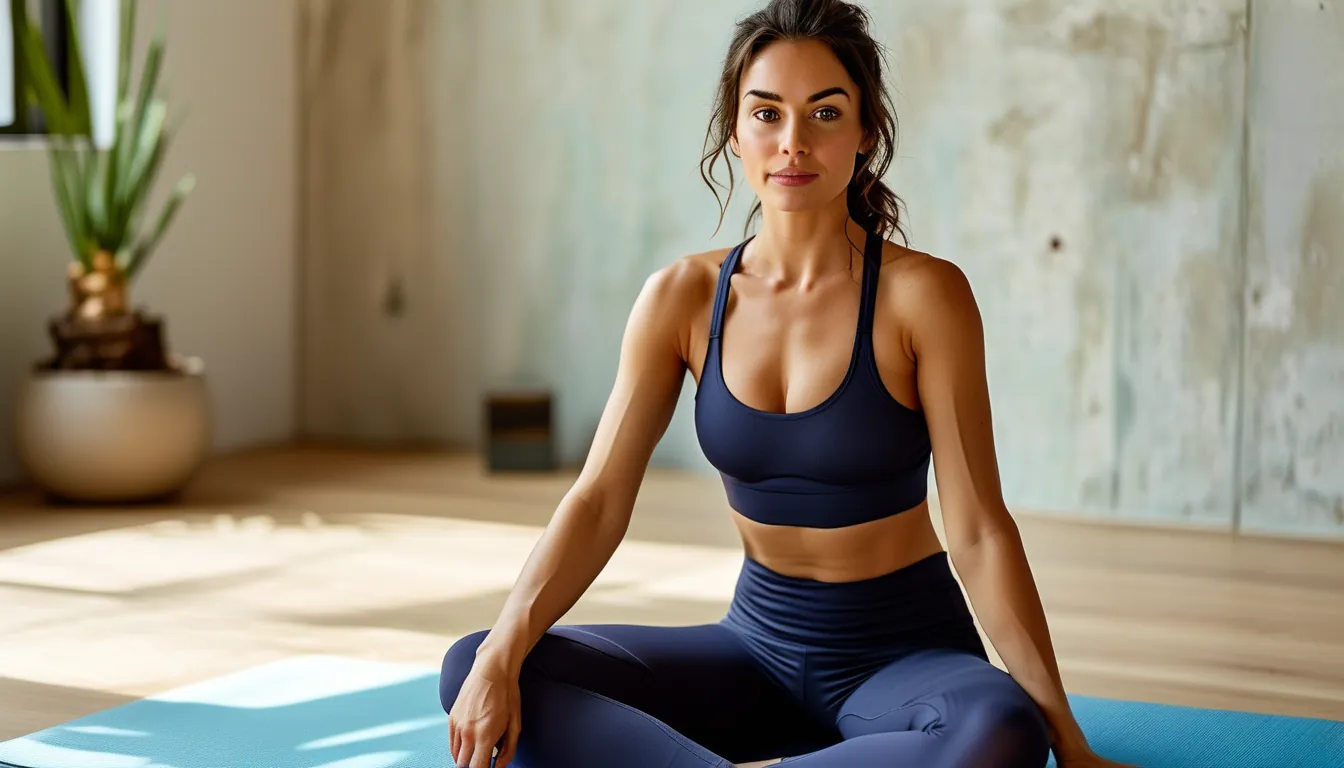
7 Reasons Your Pilates Mat Setup Is Quietly Working Against You
Quick Answer: A Pilates mat needs to be thicker than a yoga mat to protect the spine during rolling work, firm enough that your pelvis does not sink and destabilise your alignment, long enough that your head stays on it during roll-downs, and grippy enough that your feet do not slide. A thick soft foam mat feels comfortable and actively reduces your ability to feel and control position. These seven signs tell you which specific property is wrong.
Your instructor keeps giving you the same correction. You keep not being able to do the thing.
This blog has covered why the same correction comes back and why form quietly drifts, and the mat is the variable nobody checks, because it looks like a piece of foam rather than a piece of equipment.
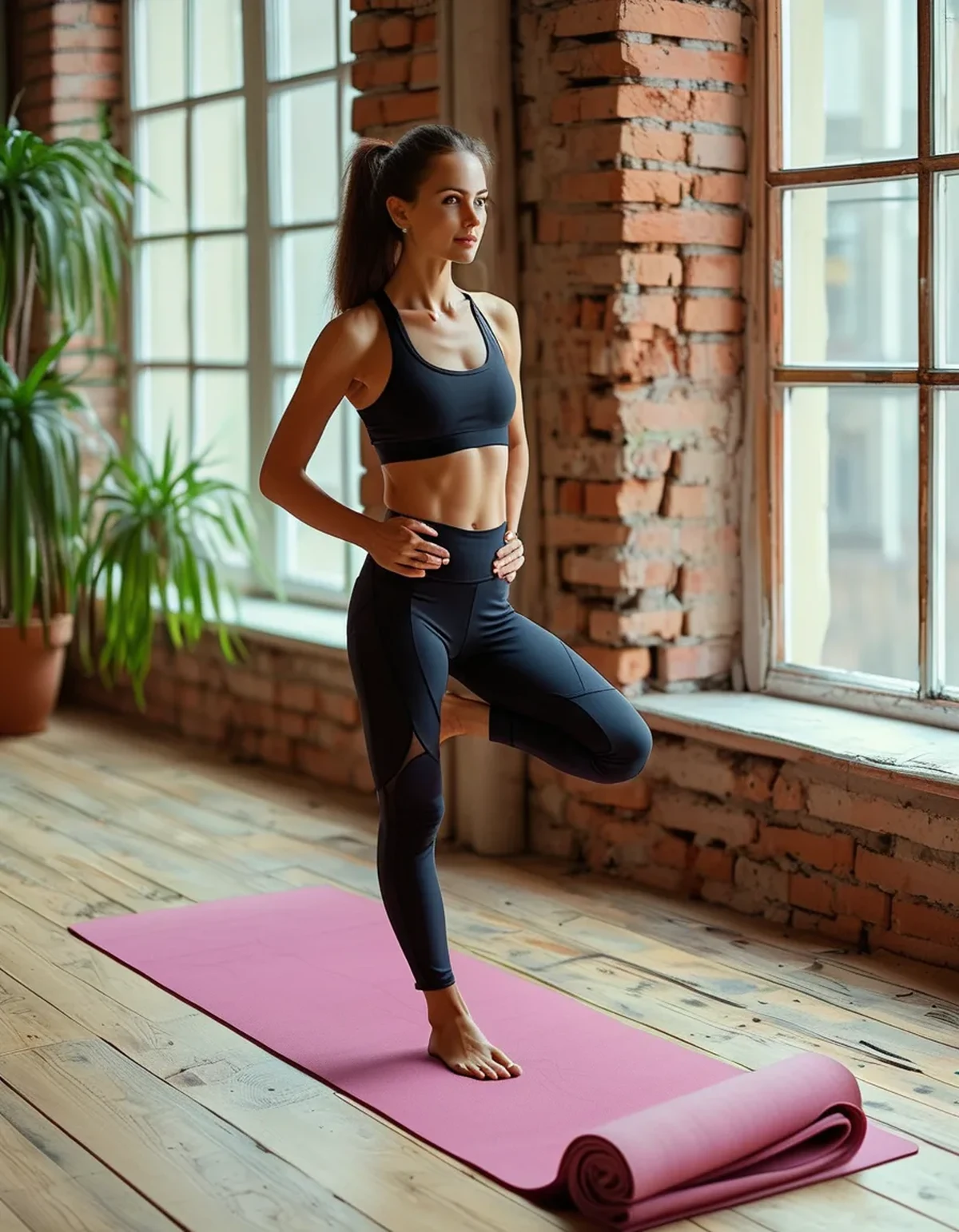
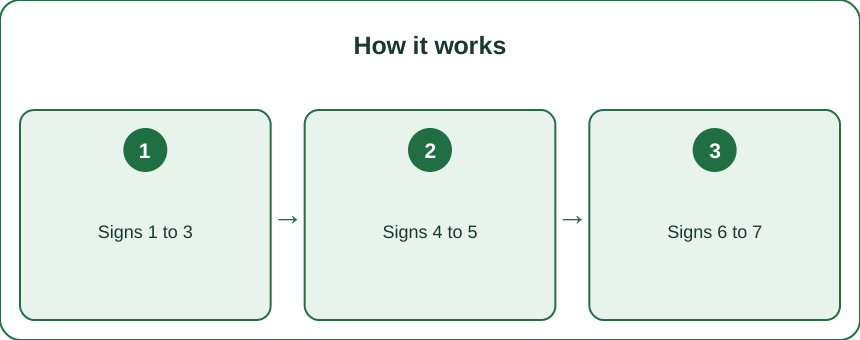
Signs 1 to 3: thickness and firmness problems
1. Your spine hurts during roll-ups and rolling like a ball
This is the clearest sign the mat is too thin. Pilates involves articulating the spine along the floor repeatedly, which a standard three to five millimetre yoga mat does not cushion. Pilates mats are typically eight to fifteen millimetres for exactly this reason. If rolling work is uncomfortable at the vertebrae rather than challenging at the abdominals, you have been troubleshooting the wrong thing. A folded towel under the spine is a workable temporary test before buying anything.
2. You cannot find neutral pelvis on the mat but can on the floor
A soft, squashy mat lets your pelvis sink unevenly, so the reference surface underneath you is no longer flat. Neutral pelvis depends on feeling the relationship between your sacrum, ribs, and the floor, and a mat that compresses differently under different parts of you removes that feedback. If a cue makes sense on a hard floor and not on your mat, the mat is too soft, not too thin. Firmness and thickness are separate properties, and Pilates needs both high.
3. Your lower back arches during leg work no matter what you do
When a mat compresses more under the heavier pelvis than under the lighter ribcage, it tilts you. That tilt shows up as an arch you cannot correct, because you are correcting against a surface that is itself sloped. This is one of the most frustrating experiences in home Pilates and it disappears entirely on a firm surface. Test it by doing the same exercise directly on a carpeted floor and seeing whether the problem persists.
Signs 4 to 5: size and position problems
4. Your head comes off the end during roll-downs
Standard yoga mats are frequently shorter than Pilates work requires, because Pilates involves a great deal of movement along the length of the mat rather than staying in one footprint. When your head lands on a hard floor at the bottom of a roll-down, you tense your neck in anticipation on every repetition, which is exactly the neck tension this blog has covered as a common complaint in abdominal work. The fix is a longer mat, and if that is not available, orienting yourself so the head end has a folded towel.
5. Your feet slide during footwork and standing transitions
Grip matters in two directions and most mats only do one. A mat that is grippy when dry can become slippery with any moisture, and Pilates involves enough sustained holding that hands and feet do get damp. A sliding foot means you brace against the slide, which recruits exactly the superficial muscles the exercise is trying to bypass. This is a common reason people report feeling an exercise in the wrong place, which this blog has written about separately. Grip socks solve the foot half of this cheaply and completely.
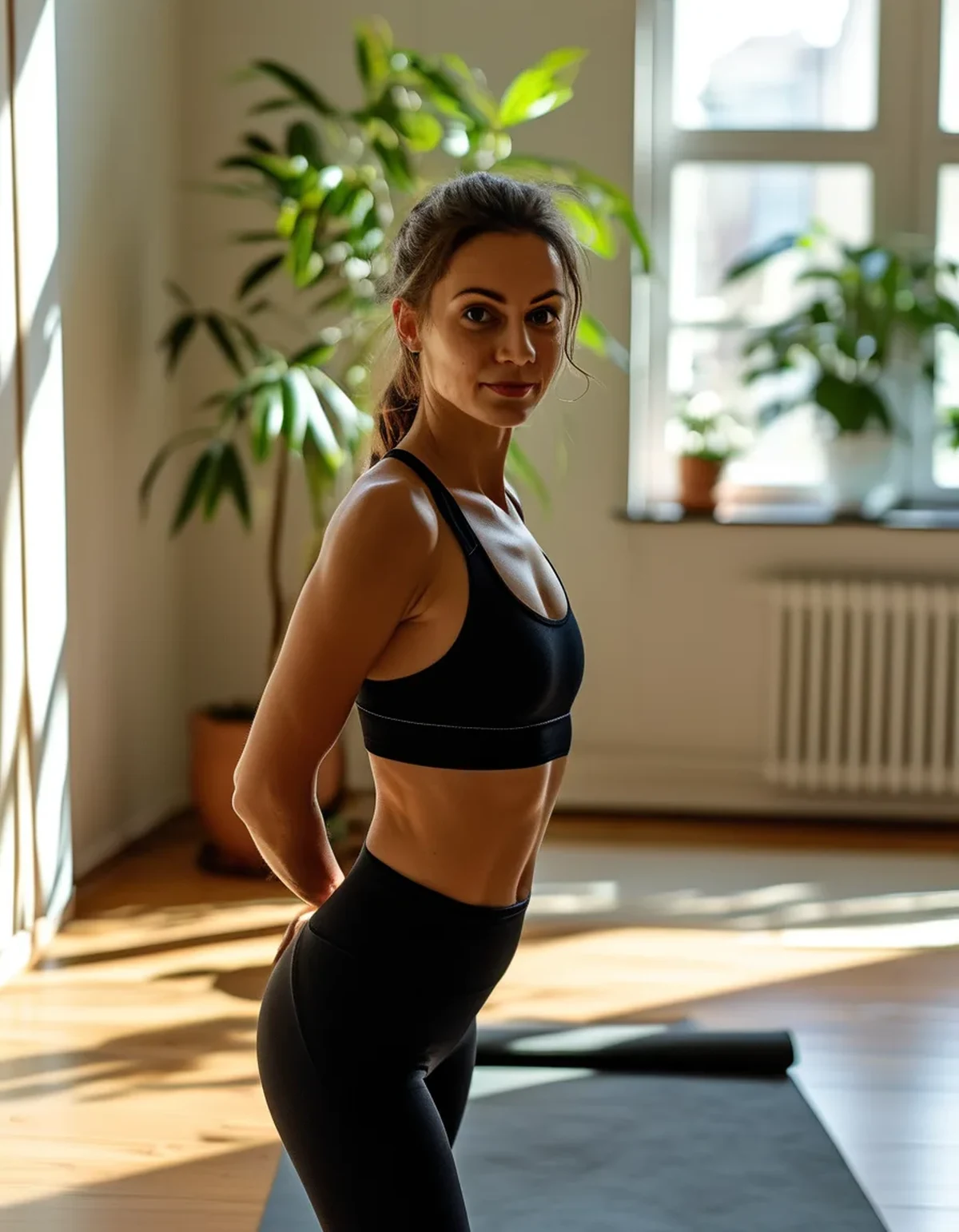
Signs 6 to 7: environment and placement problems
6. You feel unstable and cannot tell why
Mat placement relative to the room matters more than people expect. Working parallel to a wall gives your peripheral vision a strong vertical reference, which improves your sense of alignment considerably. Working in the middle of an open room, or facing a cluttered visual field, removes that reference. Similarly, working on a mat over carpet introduces a soft unstable layer beneath a firm one, which produces exactly the sinking problem described above even with a good mat. A firm flat floor under the mat is part of the setup, not a detail.
7. Everything is harder in a cold room, and the mat is part of it
This blog has covered why Pilates feels harder in a cold studio. The mat contributes directly, because a cold floor conducts heat away from every point of contact, and a thin mat provides almost no insulation. In a cool room a thicker mat is both more comfortable and genuinely warmer, which changes how easily you access range of motion in the first ten minutes. As autumn arrives, a mat that was fine in July can become a real obstacle in an unheated room.
What Nobody Tells You About Choosing a Pilates Mat
Thickness and firmness are independent, and you need both. The common mistake is buying the thickest available mat, which is usually also the softest, and getting a worse result than a thin firm one. Look for dense material at ten millimetres or more rather than squashy material at fifteen.
Material determines almost everything. TPE and NBR foam are common in thick mats and vary hugely in density. PVC is firmer and heavier. Natural rubber is grippy and firm and heavy. For Pilates specifically, density is the property to prioritise, and it is rarely on the label, so press your thumb into the mat and see how far it goes.
A yoga mat is not a Pilates mat and the difference is not marketing. Yoga prioritises grip and a stable connection to the floor for standing balance, so mats are thin and grippy. Pilates prioritises spinal protection during rolling work, so mats are thick and firm. Using a yoga mat for Pilates is workable and it is a compromise on the spine.
Two mats stacked is a genuinely good solution. A firm thin mat on top of another firm thin mat gives thickness without the sponginess of a single thick soft mat. Many people already own two.
Reformer work has different requirements entirely. If you do both, do not judge your mat by how reformer classes feel, since the reformer carriage is a firm padded surface with a headrest and the whole comparison breaks down. This blog has covered reformer versus mat separately.
Mats compress permanently over time. A mat that supported you two years ago may have lost a meaningful share of its thickness in the areas you use most. This is invisible until you lay a new mat beside it.
Where you store it changes it. Rolling a mat tightly and leaving it for months creates a permanent curl that will not lie flat, which introduces its own instability. Store it flat or rolled loosely, and unroll it a few hours before use if it has been stored tightly.
FAQ: Pilates Mat Questions, Answered
How thick should a Pilates mat be?
Typically eight to fifteen millimetres, considerably thicker than a standard yoga mat, because Pilates involves rolling along the spine repeatedly. Prioritise a dense firm mat at ten millimetres over a soft squashy one at fifteen.
Can I use a yoga mat for Pilates?
You can, and it is a compromise. Yoga mats are usually too thin to protect the spine during rolling work and often too short for roll-downs. Stacking two mats is a reasonable fix if you already own them.
Why does my lower back arch on my mat but not on the floor?
Because a soft mat compresses more under your heavier pelvis than under your ribcage, tilting you. You are then correcting your alignment against a surface that is itself sloped, which is why the correction never works.
TL;DR:
- Spine discomfort during rolling means the mat is too thin. Losing neutral pelvis means it is too soft. Those are different problems.
- Head coming off the end during roll-downs causes anticipatory neck tension on every repetition.
- Grip failure makes you brace, which recruits exactly the muscles the exercise is trying to bypass. Grip socks fix the foot half.
- Prioritise density over thickness, work parallel to a wall, and never put a mat over carpet.
Press your thumb into your mat. If it sinks easily, that is what has been undoing the last three corrections.
See It in Motion
Seen here: High Waist Yoga Leggings with Inner Pocket — shop it on bubblelime.com
Keep Reading
This article is for general informational and styling purposes only. Fit, sizing, and product availability may vary.