7 Reasons Your Pilates Instructor Keeps Correcting the Same Thing
Quick Answer: A correction that will not stick usually means the fault is downstream of something else - a breathing pattern, a range you do not have yet, a load that is too high, or a cue you are interpreting differently than intended. Repeating the fix consciously does not work because conscious attention cannot supervise a whole movement. The fastest route is to ask what the correction is for, then find the one prerequisite you are missing and drill it outside of class.
Most persistent form faults have exactly one root cause, and it is rarely the thing being corrected.
Here are the seven reasons, and what to do about each.
1. You are being corrected for a symptom, not a cause
This accounts for a large share of persistent corrections.
Ribs flaring, shoulders creeping up, neck straining, low back arching - these are almost always downstream events. They are what the body does when something upstream cannot do its job.
Ribs flaring is usually a breathing pattern, not an abdominal weakness. Shoulders creeping up in overhead work is often limited thoracic mobility. Neck strain in ab work is frequently a load problem rather than a positioning problem.
Correcting the symptom directly requires continuous conscious effort, which is why it lasts about forty seconds. The moment your attention moves to the next thing, the underlying constraint reasserts itself.
What to do: ask the question directly. “What is causing this?” is a different and far more useful question than “how do I fix this?” A good instructor will tell you, and the answer usually points somewhere other than where the correction was aimed.
2. The cue means something different to you than it does to them
Pilates cues are metaphorical, and metaphors do not transfer reliably.
Scoop, zip up, navel to spine, ribs down, lengthen through the crown. Every one of these means something specific to the instructor and something approximate to you. Two people can execute a cue in visibly different ways and both believe they are complying.
The classic example is engage your core. Some people interpret this as bracing hard, some as sucking in, some as a gentle deep contraction. Sucking the belly in and bracing produce different, and sometimes opposite, results - and one of them makes the ribs flare that you are being corrected for.
What to do: ask for the cue in a different form. “Can you tell me what that should feel like?” or “where should I feel it?” reframes it from instruction to sensation. A hands-on cue, where permitted, transfers in seconds what a verbal cue cannot transfer in months.
3. You do not have the range yet
Sometimes the correction is asking for a position your body currently cannot reach.
A common example: sitting tall with straight legs. If your hamstrings are limiting, the pelvis tips backward and the spine rounds. Being told to sit taller does not create hamstring length, so the position is unavailable no matter how hard you try.
Same for overhead arm work with limited thoracic extension, and for a neutral spine in a deep hip flexion position.
The tell: when you try to make the correction, something else immediately goes wrong. That is a range problem, not an effort problem.
What to do: modify. Sit on a folded blanket or bend the knees for seated work; reduce the range overhead. Then work the mobility separately, outside of class, where you can spend the time. The class position becomes available once the prerequisite exists - not before.

4. The load or the spring setting is wrong, and 5. You are holding your breath
4. Load that exceeds your current control
Form breaks down when demand exceeds capacity. On a reformer, spring tension that is too light can be as difficult as one that is too heavy - lighter springs demand more control, not less, which surprises people.
The tell: the first few repetitions look right and it deteriorates from there. That is a capacity limit, and no cue fixes it in the moment.
What to do: reduce the repetitions or change the setting and keep the quality. Six good repetitions build the pattern; twelve deteriorating ones rehearse the fault.
5. Breath-holding
This is the single most common invisible cause, and it produces several different visible corrections.
Holding your breath raises intra-abdominal pressure, which pushes the ribs out and the pelvic floor down. So the flared ribs and the loss of deep abdominal connection are both breathing problems wearing a form-problem costume.
Most people hold their breath at the hardest point of a movement without noticing, which is exactly where the correction lands.
What to do: count out loud during the hard part. You cannot hold your breath while speaking, so it forces the issue. Once breathing is continuous, several corrections often resolve at once.
6. You are practicing the correction only in class
One hour a week against twenty waking hours of the opposite pattern.
Movement patterns are trained by volume. If you spend eight hours a day at a desk in a rounded posture and one hour a week working against it, the desk is winning by a large margin - and the correction is fighting a habit, not a technique error.
This is especially true for shoulder position, thoracic extension, and breathing pattern, all of which are shaped continuously by how you sit.
What to do: take one thing out of class and do it daily for two minutes. Not the exercise - the prerequisite. Thirty seconds of a breathing drill, a doorway chest opener, or a hamstring stretch, done daily, beats a full extra class.
And ask for exactly one thing to work on, not a list. A single focus for two weeks changes more than five corrections for a month - which is also why instructors repeat the same one rather than adding new ones.
7. It is not actually a fault - plus the FAQ
Sometimes the correction is aspirational rather than remedial. Instructors cue toward an ideal, and bodies differ. Hip structure, spine shape, and limb proportions all vary enough that some textbook positions are not achievable for some people, and that is not a flaw to be fixed.
The tell: the correction never gets closer despite genuine mobility work, and forcing it causes pinching or pain. Pinching is a signal to stop, not to try harder.
What to do: say so plainly. “This position pinches in my hip - what is the alternative?” A good instructor will offer one immediately.
FAQ: Pilates Correction Questions, Answered
Is it rude to ask why during class?
Not at all - instructors generally want the question. A quick “what should I feel?” takes five seconds and is far more efficient than nodding and repeating the same fault.
How long should a correction take to stick?
For a genuinely new motor pattern, weeks of consistent practice. If nothing has changed in a month of real effort, the cause is elsewhere - go back through this list.
Should I switch instructors if the same thing keeps coming up?
Not necessarily, but a different instructor’s phrasing can unlock something instantly. The cue that finally lands is often just the same idea said differently, and there is nothing wrong with trying another class to find it.
TL;DR:
- A correction that will not stick is usually treating a symptom - ask what is causing it, not how to fix it.
- Cues are metaphors and yours may not match your instructor’s; ask what it should feel like.
- If fixing one thing breaks another, you are missing a range - modify and drill the prerequisite separately.
- Breath-holding causes several different-looking faults at once. Count out loud through the hard part.
- Take one prerequisite home for two minutes a day rather than trying to hold five corrections in class.
- Some positions are not available to some bodies. Pinching means stop, not try harder.
Pick the one correction you hear most and ask what it is for at your next class. The answer usually points somewhere you have not been working.
See It in Motion
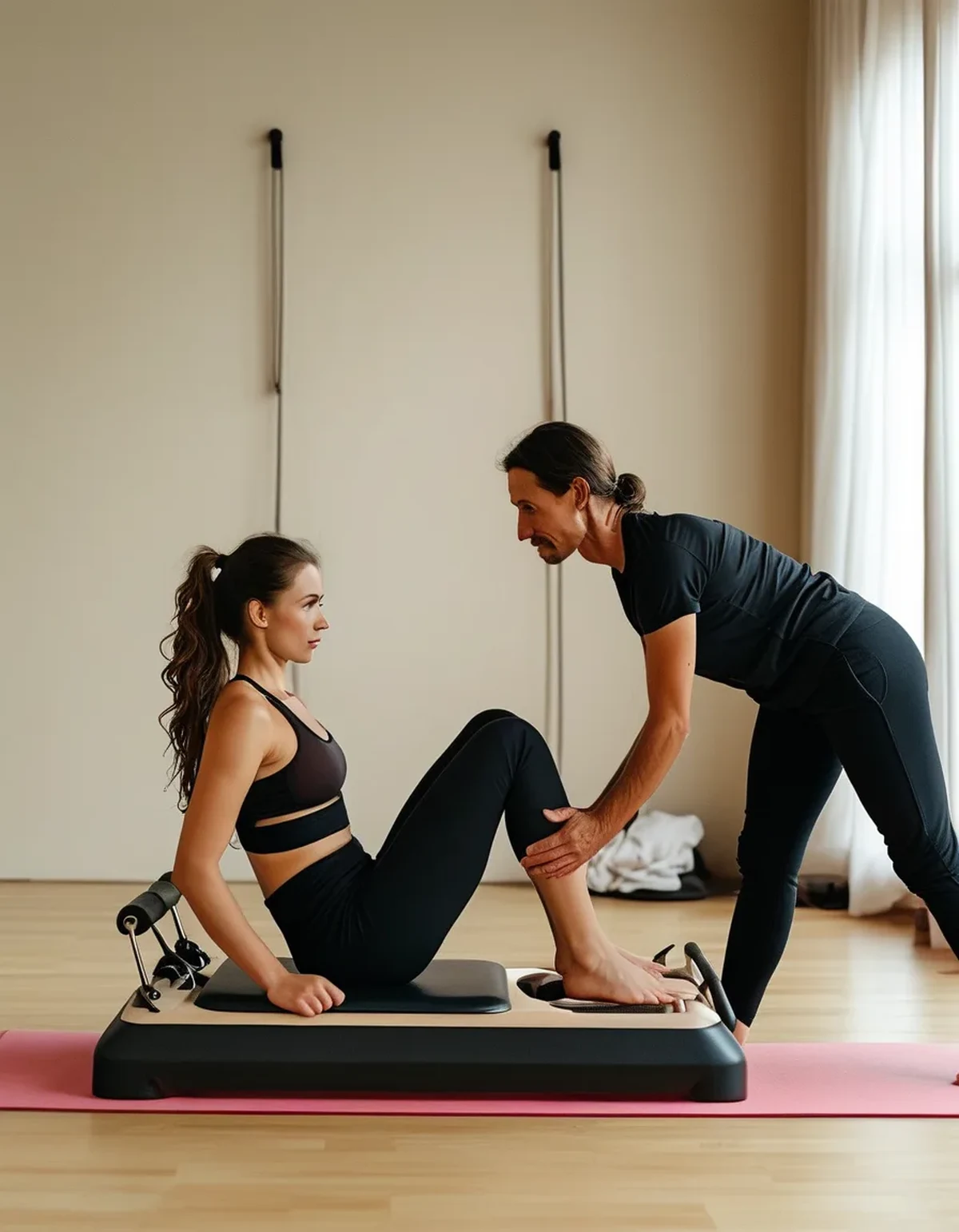
Seen here: Bootcut Capri Yoga Pants with Pockets — shop similar styles on bubblelime.com
Keep Reading
This article is for general informational and styling purposes only. Fit, sizing, and product availability may vary.