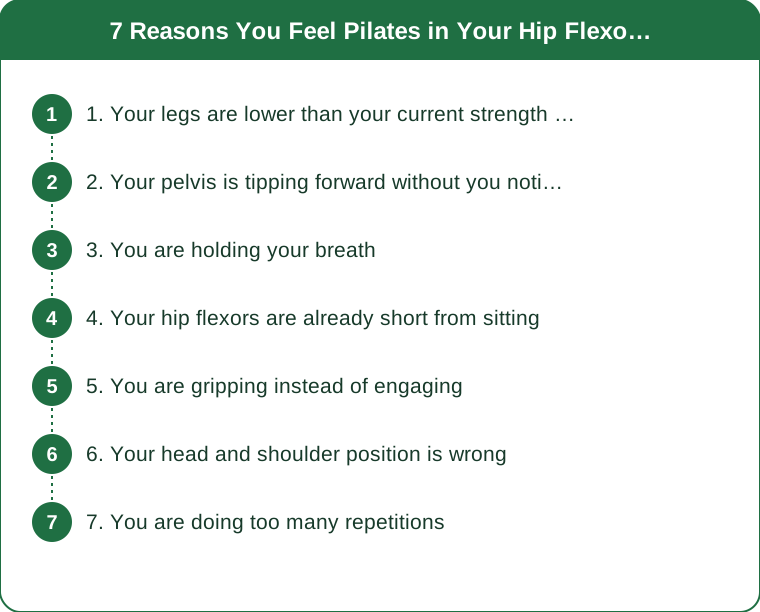
7 Reasons You Feel Pilates in Your Hip Flexors Instead of Your Abs
Quick Answer: Hip flexors take over in Pilates when the abdominals cannot control the pelvis against the load being asked of them. The most common causes are legs too low for your current strength, a pelvis tipping forward, breath-holding, and starting from an already-shortened hip flexor position. Raising the leg angle is the single fastest fix and it works within one session.
The instructor says you should feel this in your deep abdominals.
You feel it in a tight burning strip at the front of your hips, and you have felt it there for six months.
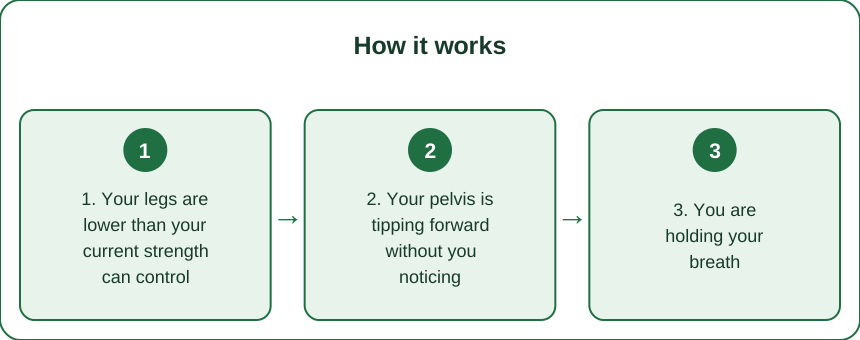
1. Your legs are lower than your current strength can control
This is the cause in the majority of cases, and it is the easiest to fix.
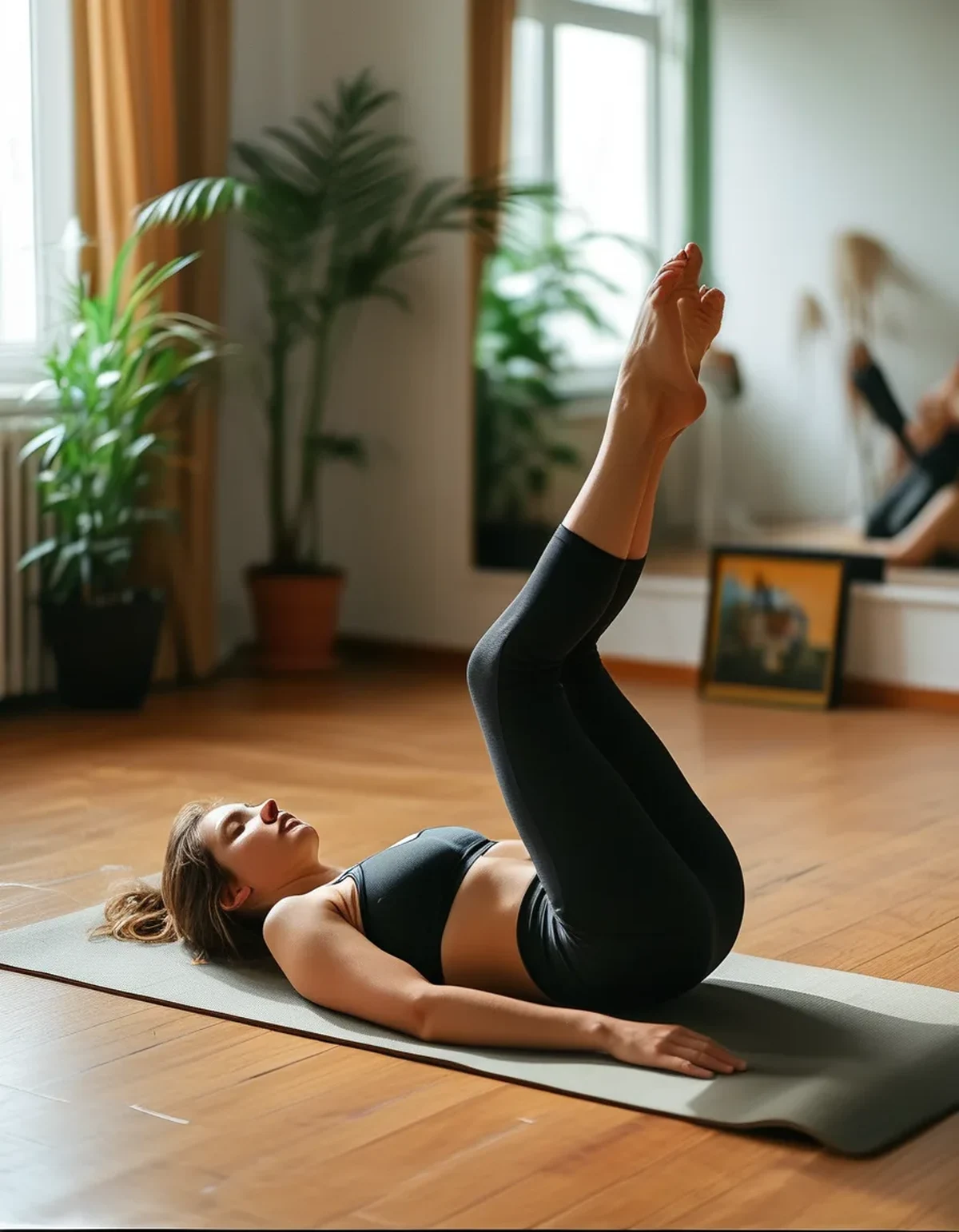
Leverage rises sharply as legs lower. The closer your legs get to the floor, the longer the lever arm and the more torque your abdominals must resist. The difference between 60 degrees and 30 degrees is not small — it is most of the difficulty of the exercise.
When abdominals cannot hold, hip flexors step in. The psoas is a powerful muscle that attaches from the lumbar spine to the femur. When the abdominals cannot control the pelvis, it takes over both the leg holding and the pelvic position, and you feel exactly that.
The test is immediate. Raise your legs 20 degrees higher and see whether the sensation moves. If the burn shifts to your abdominals, you had a leverage problem and now you have your working range.
Higher is not easier in a way that matters. Working at the angle where you can maintain control is what builds the strength to work lower later. Grinding at an angle you cannot control trains the compensation instead.
Progress by degrees, not by exercises. Lower your working angle by five degrees at a time across weeks. This is slower than most people want and it is the route that actually gets there.
2. Your pelvis is tipping forward without you noticing
An anterior tilt puts your abdominals at a mechanical disadvantage before the exercise starts.
A tilted pelvis lengthens the abdominals. In an anterior tilt, the front of the pelvis drops and the abdominal wall is placed in a lengthened position where it produces force poorly.
The same tilt shortens the hip flexors. They start closer to their strongest position, so they are already primed to dominate the movement.
You usually cannot feel it. This is the frustrating part. A tilt of a few degrees is invisible from the inside and decisive for which muscles work.
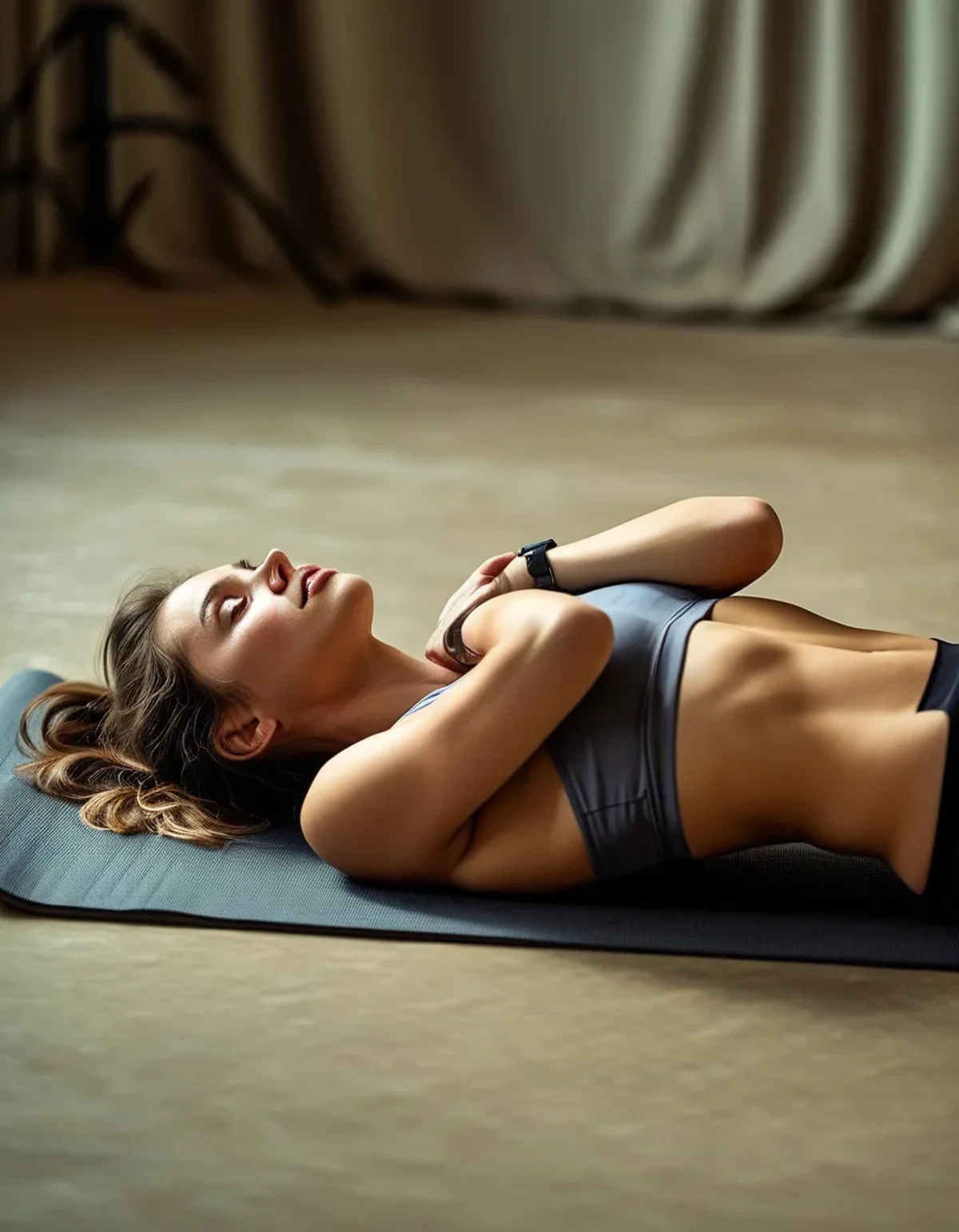
The check is a hand under the lower back. Lying on your back, slide a hand under your lumbar spine. A small natural gap is correct. If your whole hand fits easily and the gap grows when you lift your legs, the pelvis is tipping.
The fix is to find neutral first, then move. Set the position before the exercise begins rather than trying to correct mid-movement, and stop the repetition the moment the gap grows. Quality of position beats number of repetitions here by a wide margin.
3. You are holding your breath
Breath-holding changes pressure management in a way that directly favors the hip flexors.
Held breath means a rigid, pressurized abdomen. That feels stable, and it is a real stabilizing strategy — but it removes the dynamic abdominal contraction that Pilates is trying to train.
The deep abdominals work with the breath, not against it. The transverse abdominis engages naturally with a full exhale. Hold your breath and you have bypassed the mechanism you came to train.
Breath-holding also raises pressure downward. That matters for the pelvic floor and is a separate reason to fix it.
The cue is to exhale on the effort. Exhale as you lower the legs, inhale as you return. If you cannot maintain the breath pattern, the exercise is too hard — which is the same conclusion as reason one, arrived at differently.
Test it out loud. Count aloud during the exercise. If you cannot, you were holding your breath, and the sensation will usually shift within two repetitions of fixing it.
4. Your hip flexors are already short from sitting
A shortened muscle sits closer to its strongest range and volunteers for work.
Hours of sitting keeps hip flexors in a shortened position. Eight hours a day of 90-degree hip flexion is a substantial adaptation, and it changes the resting length these muscles operate from.
Short and tight is not the same as strong, but it is dominant. A shortened muscle produces force readily at short lengths, which is exactly the range these exercises live in.
It also drags the pelvis into a tilt. Which loops back to reason two — the sitting problem and the tilt problem are frequently the same problem.
Stretching alone rarely fixes it. A stretch changes tissue length temporarily. Without strengthening the opposing pattern, sitting reasserts it within days. Both are needed, and most people only do one.
Do a hip flexor stretch before class, not after. Thirty seconds per side in a half-kneeling position immediately before your session measurably changes what you feel during it — and it is the single most reliable way to test whether this is your cause.
5. You are gripping instead of engaging
Maximum tension and correct activation are different things, and one blocks the other.
Clenching everything recruits the strongest available muscles. Under a general instruction to tighten, your body uses what is powerful — the hip flexors and superficial abdominals — not what is subtle.
The deep abdominals engage at low intensity. Transverse abdominis activation is a gentle drawing-in, not a squeeze. Effort levels above about 30 percent tend to recruit the outer layers and mask the deeper one entirely.
Scoop is a badly interpreted cue. Most people hear it and suck in hard. What it points at is a subtle lengthening and narrowing, not a forceful contraction — which is why the same cue produces such different results in different people.
Less effort often produces more of the right sensation. This is deeply counterintuitive in a fitness context, and it is the single most common thing experienced instructors have to un-teach.
Try one repetition at half effort. Deliberately do the movement at 50 percent of your usual tension. Many people feel their abdominals for the first time doing exactly this.
6. Your head and shoulder position is wrong
What happens at the top of your body changes what happens at the bottom.
A dropped head disengages the upper abdominals. In exercises with a head lift, letting the head fall back removes upper abdominal involvement, which shifts more of the load to the hip flexors.
Straining the neck is the opposite error. Pulling with the neck creates tension that inhibits rather than helps, and it is why so many people leave Pilates with a sore neck and unworked abs.
The reference point is the lower ribs. Think about drawing your lower ribs toward your hips rather than lifting your head. The head follows the ribcage rather than leading it.
Arm position changes the load too. Arms overhead lengthen the whole front line and make everything harder; arms reaching forward reduces the demand. This is a legitimate way to regress an exercise without changing your leg angle.
Use a small cushion if your neck fatigues first. If your neck gives out before your abdominals, you never reach the training stimulus at all — supporting the head is a tool, not a failure.
7. You are doing too many repetitions
Fatigue guarantees the compensation you are trying to avoid.
Form fails before effort does. The first few repetitions may be well controlled and by the tenth the pelvis has tipped and the hip flexors have taken over. Everything after that point is practicing the wrong pattern.
Repetitions past the failure point are worse than not doing them. You are training the compensation with your full attention, which is why some people get more hip-flexor-dominant over months of consistent practice.
Stop at the first change in sensation. When the burn moves from abdominals to hips, that repetition was the last useful one. Six good repetitions genuinely beat twenty degraded ones.
A class setting makes this hard, and it is fine to stop early. Nobody is watching, and resting for the last four repetitions while everyone else continues is the more advanced choice.
Seasonal note: a cold studio makes this worse, because cold muscle fatigues faster and cold hip flexors are stiffer at the start. As studios cool through autumn, arrive earlier and do a longer warm-up. Persistent hip pain rather than muscular fatigue is worth a professional look — this is general information, not medical advice.
TL;DR:
- Raise your leg angle 20 degrees first — leverage is the cause in most cases and the test takes seconds
- Check for an anterior pelvic tilt with a hand under your lower back before and during the movement
- Exhale on the effort; breath-holding bypasses the deep abdominal engagement entirely
- Stretch hip flexors before class, not after, and try one repetition at half your usual tension
- Draw the lower ribs toward the hips instead of lifting the head, and support the neck if it fatigues first
- Stop the set at the first change in sensation — degraded repetitions train the compensation
Work through these in order and most people find it in the first two. The encouraging part is that this is a fixable positioning problem, not a sign that your abdominals are hopeless — they have been waiting for a position where they can actually contribute.
See It in Motion
Seen here: Bootcut Yoga Pants with Side Pockets — shop it on bubblelime.com
Keep Reading
This article is for general informational and styling purposes only. Fit, sizing, and product availability may vary.