7 Reasons Your Pilates Session Feels Different Every Single Time
Quick Answer: A Pilates session rarely feels identical twice because small variables — spring tension, hydration, sleep, and even which instructor is cueing — shift the actual demand on your body far more than the workout format itself changes week to week.
If last week’s class felt manageable and this week’s identical routine felt twice as hard, one of these seven is almost always the reason.

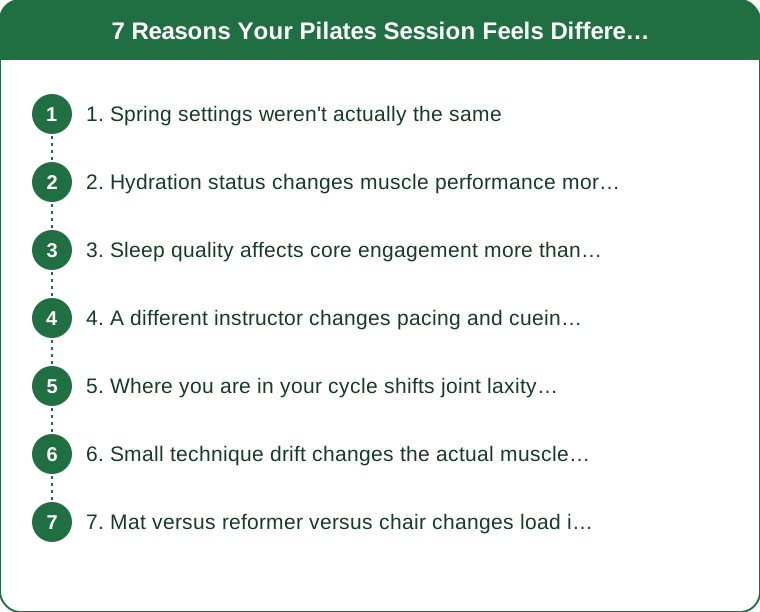
1. Spring settings weren’t actually the same
Even a one-spring difference on a reformer changes resistance meaningfully, and it’s common for a different reformer or a slightly bumped spring to go unnoticed until the exercise feels unexpectedly harder or easier than remembered. Checking spring count at the start of class removes this variable entirely.
2. Hydration status changes muscle performance more than expected
Even mild dehydration reduces muscular endurance and increases perceived effort during sustained isometric holds, which Pilates relies on heavily — a session following a poorly hydrated day can feel disproportionately harder for reasons that have nothing to do with the workout itself.
3. Sleep quality affects core engagement more than most exercises
Pilates demands sustained core control rather than short bursts of power, and that kind of endurance-based engagement is particularly sensitive to poor sleep the night before, more so than in exercises relying on short, explosive effort.

4. A different instructor changes pacing and cueing intensity
Instructors vary meaningfully in how long they hold positions, how much rest is built between exercises, and how much verbal cueing pushes for extra range or control, all of which change the actual physical demand of a nominally ‘same’ class format.
5. Where you are in your cycle shifts joint laxity and energy
Hormonal fluctuations across the menstrual cycle affect both energy availability and joint stability, and Pilates’ emphasis on controlled, precise movement can make cycle-related changes more noticeable than in less control-dependent workouts.
6. Small technique drift changes the actual muscles working
Subtle form drift — like allowing momentum to assist a movement that should be controlled — can make an exercise feel easier without doing so correctly, meaning a harder-feeling session might actually mean better, more accurate engagement than a session that felt easy.
7. Mat versus reformer versus chair changes load in ways that aren’t obvious
Switching equipment even within the same broader Pilates practice changes resistance curves and stabilization demands substantially, so a week on the reformer followed by a mat-based week can feel like an entirely different difficulty level despite both being ‘Pilates.’
TL;DR:
- Spring settings, hydration, and sleep are the most commonly overlooked variables
- Different instructors change pacing and cueing intensity even in the same format
- Cycle-related hormonal shifts affect joint stability and endurance noticeably
- A harder-feeling session sometimes means better technique, not worse fitness
Inconsistent difficulty is normal and expected — it’s rarely a sign anything is wrong with your training.
See It in Motion
Seen here: Super High Waist Embossed Yoga Leggings with Inner Pocket — shop it on bubblelime.com
Keep Reading
This article is for general informational and styling purposes only. Fit, sizing, and product availability may vary.