7 Reasons Your Pilates Progress Shows Up Everywhere Except the Mat
Quick Answer: Pilates trains motor control, postural endurance and breathing coordination before it trains anything that looks like a mat achievement. Those adaptations show up first in low-demand everyday tasks — standing, carrying, turning in bed, sitting through a meeting — because those are exactly the situations where small control improvements are noticeable. Judging progress by whether the roll-up works yet misses most of what has already changed.
Six weeks in, the exercises feel the same. The roll-up is still a negotiation.
Meanwhile you carried a full laundry basket upstairs without thinking about it, which was not true in June.
Here are the seven places the progress actually turns up first.

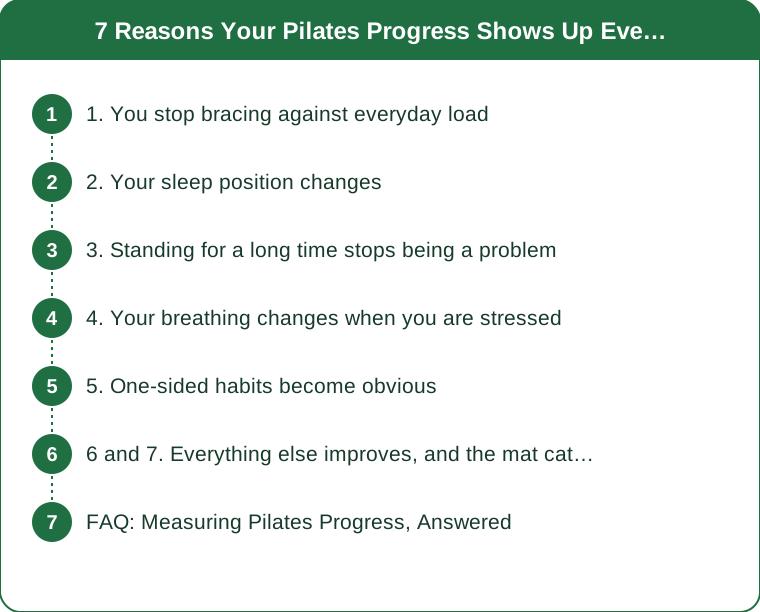
1. You stop bracing against everyday load
The first change is usually one you do not consciously notice.
Everyday tasks stop requiring a strategy. Lifting a bag, getting out of a low chair, reaching into a boot. These stop being small events that need managing.
Breath-holding decreases. Most untrained people hold their breath under load without realising. Pilates breathing patterns transfer to daily tasks faster than they transfer to hard exercises.
The improvement is in coordination, not strength. You have not got meaningfully stronger in six weeks. You have got better at organising what you already had.
It shows up under light load, not heavy. Small everyday loads are where control matters more than force, which is exactly why they change first.
Why it is invisible on the mat. Mat exercises are deliberately challenging, so a modest control improvement does not change whether you can do them. In daily life, a modest improvement changes everything.
What to look for. Notice whether you still think about how to pick things up. If you have stopped, that is the adaptation.
2. Your sleep position changes
One of the earliest and least discussed signs, and people almost never connect it to class.
Turning over in bed gets easier. Rolling in bed is a segmental spinal movement, which is precisely what mat Pilates trains. Improvement here often arrives within the first month.
You wake in different positions. Reduced tension through hips and lower back changes what feels comfortable overnight.
Morning stiffness shortens. Not necessarily less stiffness, but a shorter time to move freely after waking.
Fewer pillows, or different ones. Changed neck and thoracic position often makes an old pillow setup feel wrong.
Getting out of bed changes shape. The log-roll to sitting becomes a smooth movement rather than a manoeuvre.
Why it happens early. Sleep transitions are low-load, high-control movements — the exact profile Pilates improves first.
3. Standing for a long time stops being a problem
Postural endurance improves considerably before postural strength does.
Queues and gatherings get easier. Standing for twenty minutes without shifting constantly is an endurance task for deep postural muscles.
The fidget reduces. Constant weight shifting is a sign that no single position is sustainable. Fewer shifts means better endurance.
Lower back fatigue arrives later. The change is usually in when discomfort starts, not whether it exists.
You stand taller without effort. The key word is effort. Anyone can stand tall for ten seconds; the adaptation is doing it without maintaining it.
Kitchen and desk tasks change first. Washing up, chopping, standing at a counter. These are the most common long-standing tasks in a normal day.
Why the mat does not show it. Mat work is done lying down for most of a class, so upright endurance is a transferred benefit rather than a directly tested one.

4. Your breathing changes when you are stressed
This one surprises people most, and it is well grounded.
Lateral rib expansion becomes available. Pilates breathing trains rib movement rather than shoulder movement, and once that pattern exists you can access it under stress.
Shoulder-lifting breathing reduces. Upper-chest breathing is the stress default, and it is a habit rather than a necessity.
You notice your own breath-holding. Awareness comes before change, and noticing that you stopped breathing while concentrating is a genuine early sign.
Recovery from exertion feels smoother. More efficient breathing mechanics show up on stairs before they show up in class.
Sighing decreases. Frequent sighing often reflects an inefficient breathing pattern, and it commonly reduces within a few weeks.
Why it matters more than the roll-up. Breathing mechanics underpin every other adaptation on this list, including the ones you are waiting for on the mat.
5. One-sided habits become obvious
Progress sometimes looks like noticing a problem you did not know you had.
You feel the asymmetry. Realising you always carry on one side, sit twisted or stand on one leg is an increase in body awareness, not a new problem.
Exercises feel different left and right. This is not a sign of getting worse. It is your perception improving to the point where an existing difference becomes detectable.
You start correcting without deciding to. Switching shoulders, uncrossing legs, evening out your stance.
Old aches relocate. As habitual patterns change, load redistributes, and a familiar ache sometimes moves before it fades.
Clothing hangs differently. People often notice a hem or waistband sitting more evenly, which is a genuine postural change made visible.
Why this counts as progress. Motor learning requires detecting error before correcting it. Noticing asymmetry is the detection stage, and it is a necessary step.
6 and 7. Everything else improves, and the mat catches up last
6. Other activities improve without you training them
Transfer effects are where the return on Pilates actually lives.
Running feels more organised. Better trunk control means less rotation lost to the torso, which shows up as comfort rather than speed.
Lifting technique improves in the gym. Bracing and breathing transfer directly, and people frequently find a plateau breaks without changing their programme.
Cycling comfort increases. Being able to hold a position without collapsing into the lower back is a trunk endurance issue.
Gardening and DIY stop costing three days. Sustained awkward positions are the highest-demand postural tasks most people do, and they improve noticeably.
Carrying children gets easier. Asymmetric, unpredictable load is exactly what control training addresses.
Why the mat lags. Mat exercises are designed to keep being hard. Their difficulty is deliberately maintained, so they are a poor measure of a moving baseline.
7. The mat progress arrives last, and suddenly
The visible achievements come after the invisible ones, and they arrive in a step rather than a slope.
Motor skills consolidate in jumps. Learning plateaus and then reorganises. The roll-up tends not to improve by degrees; one day it works.
Prerequisites accumulate silently. Segmental spinal control, breathing coordination and hip flexor length all have to arrive before the movement is possible.
Three months is a realistic timeline. For most people practising two to three times a week, the recognisable mat milestones cluster around the two-to-four month mark.
Frequency matters more than duration. Three thirty-minute sessions beats one ninety-minute session for motor learning, comfortably.
Comparing sessions is the trap. Any single class varies with sleep, cycle phase, stress and room temperature. Compare months, not sessions.
Autumn note: studios get colder from September, and cold tissue genuinely reduces range of motion in early exercises. If your progress seems to stall this month, arrive earlier and warm up longer before concluding anything about your training.
And if you want a real measure: pick one everyday task — standing for twenty minutes, carrying shopping upstairs, turning over in bed — and track that instead. It moves earlier and it matters more.
FAQ: Measuring Pilates Progress, Answered
How long before I see real changes?
Everyday changes commonly appear in 3 to 6 weeks; recognisable mat milestones usually take 2 to 4 months at two to three sessions a week.
Why does the same exercise feel harder some weeks?
Sleep, stress, cycle phase, hydration and room temperature all affect it. Session-to-session variation is normal and not informative.
Should I be sore after Pilates?
Sometimes early on, less so as control improves. Absence of soreness is not absence of progress.
How often should I practise?
Two to three times a week is the range where motor learning consolidates well for most people.
Is home practice as good as class?
For frequency, yes. For correcting the things you cannot see, an instructor is worth the cost, particularly in the first few months.
What is the best sign it is working?
When you stop thinking about how to lift, carry, stand or turn over. That is the adaptation, and it is worth more than the roll-up.
TL;DR:
- Pilates improves motor control, postural endurance and breathing before mat milestones.
- Early signs: easier carrying, easier turning in bed, longer standing tolerance, changed stress breathing.
- Noticing asymmetry is progress — error detection precedes correction.
- Transfer shows up in running, lifting, cycling and gardening before it shows on the mat.
- Mat milestones arrive suddenly at 2 to 4 months, not gradually.
Pick one everyday task and track that instead of the roll-up. It moves first, and it is the point.
See It in Motion
Seen here: Racerback Tank Top - White — shop similar styles on bubblelime.com
Keep Reading
This article is for general informational and styling purposes only. Fit, sizing, and product availability may vary.