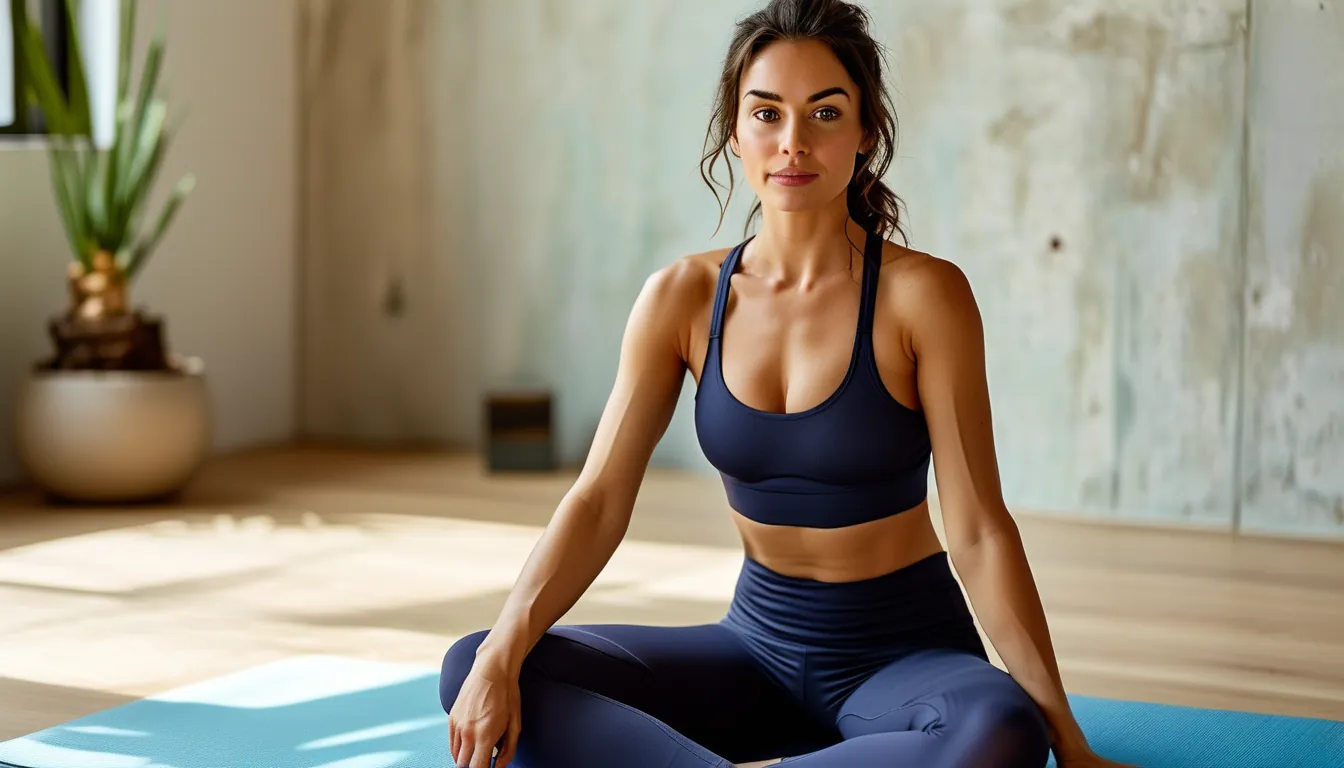
7 Reasons Pilates Feels Twice as Hard in a Cold Studio
Quick Answer: A cold room reduces tissue extensibility, slows neuromuscular recruitment, changes your breathing pattern, and increases resting muscle tone — all of which directly degrade the two things Pilates depends on most: range of motion and fine control. Longer warm-ups and staying layered for the first ten minutes recover most of it.
Your teaser was solid three weeks ago. In this week’s class you could not get past the halfway point, and your roll-down felt like it was happening in segments of three vertebrae instead of one.
Pilates is unusually sensitive to room temperature because it asks for precision and range rather than raw output. A cold room takes both.
Here are the seven specific mechanisms, and what to do about each.
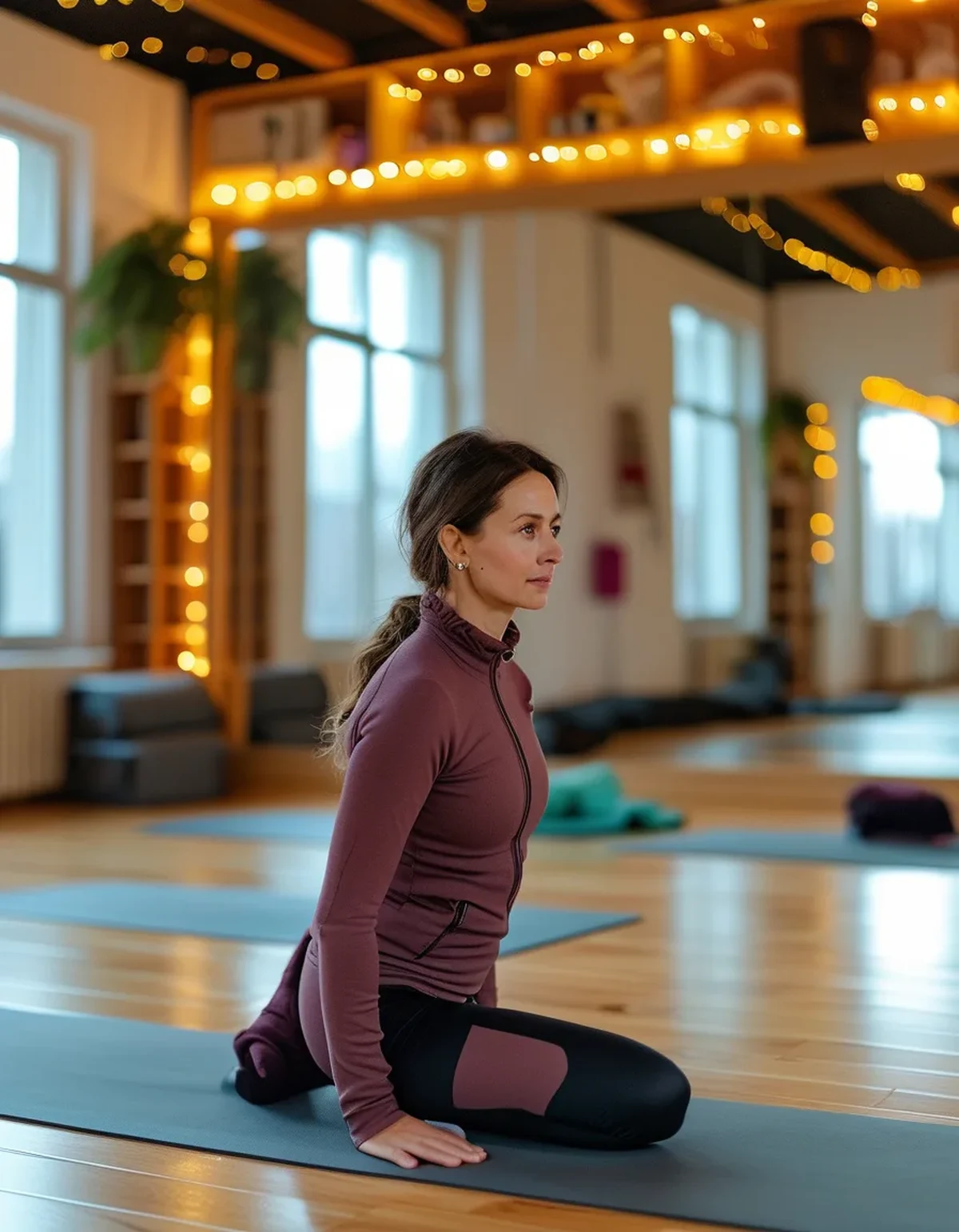
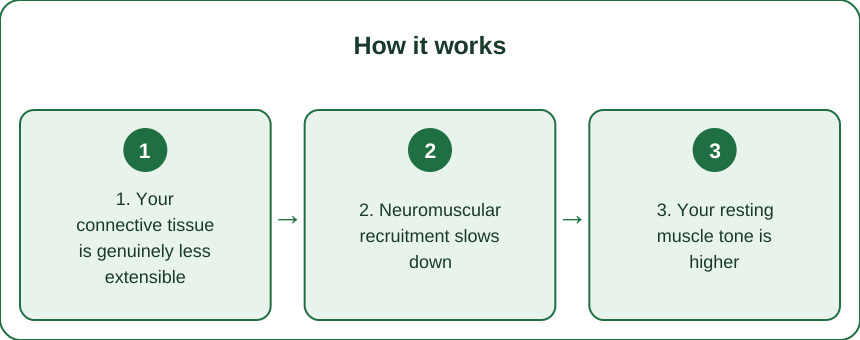
1. Your connective tissue is genuinely less extensible
This is the biggest single factor and the most physical.
Fascia, tendons, and ligaments are viscoelastic — their behavior depends on temperature. Warm tissue lengthens more readily and returns more smoothly; cool tissue is stiffer and resists deformation.
In practice this means your spinal articulation, hip flexion, and shoulder range are all measurably reduced in a cold room, before you have done anything wrong.
The Pilates-specific consequence is that exercises which depend on sequential spinal movement — roll-down, roll-up, spine stretch, rolling like a ball — feel blocky. You are not losing mobility; you are working with tissue that has not been warmed into its available range.
What to do: arrive early and do five minutes of your own general movement before the class begins. Not stretching — movement. Marching, arm circles, gentle cat-cow, pelvic tilts. Raising tissue temperature is the entire goal, and it takes longer than you think.
2. Neuromuscular recruitment slows down
Cold slows nerve conduction velocity, and Pilates depends heavily on precise, low-threshold recruitment of small stabilizing muscles.
Finding your deep abdominal engagement, your pelvic floor connection, or your serratus is harder when signal transmission is slower and proprioception is dulled. This is why cues that normally land immediately do not seem to work in a cold room.
The frustrating part is that this reads as a skill problem. You will feel like you have forgotten how to do something you could do last week.
What to do: spend longer on the preparatory work. If the class starts with breathing and pelvic tilts, resist the temptation to rush through them because they feel easy — that section is doing the recruitment work that everything else depends on. On your own, add two minutes of deliberate breath and connection work before class.
3. Your resting muscle tone is higher
Cold increases baseline muscle tone — it is part of the same response that produces shivering. Muscles sit at a higher level of low-grade contraction.
For most training that is irrelevant. For Pilates it matters a lot, because much of the practice depends on selective relaxation — releasing the neck while working the abdominals, releasing the hip flexors while working the deep core, keeping the jaw and shoulders soft.
Elevated tone makes that selectivity harder. The most common visible result is neck and shoulder tension in abdominal work, which then gets diagnosed as a form problem.
What to do: stay layered for the first ten minutes. A long-sleeve layer you remove once you are warm is far more useful than pushing through cold. Actively check jaw, neck, and shoulders during early exercises, and exhale longer than you inhale for the first few repetitions — extended exhalation reduces overall tone.
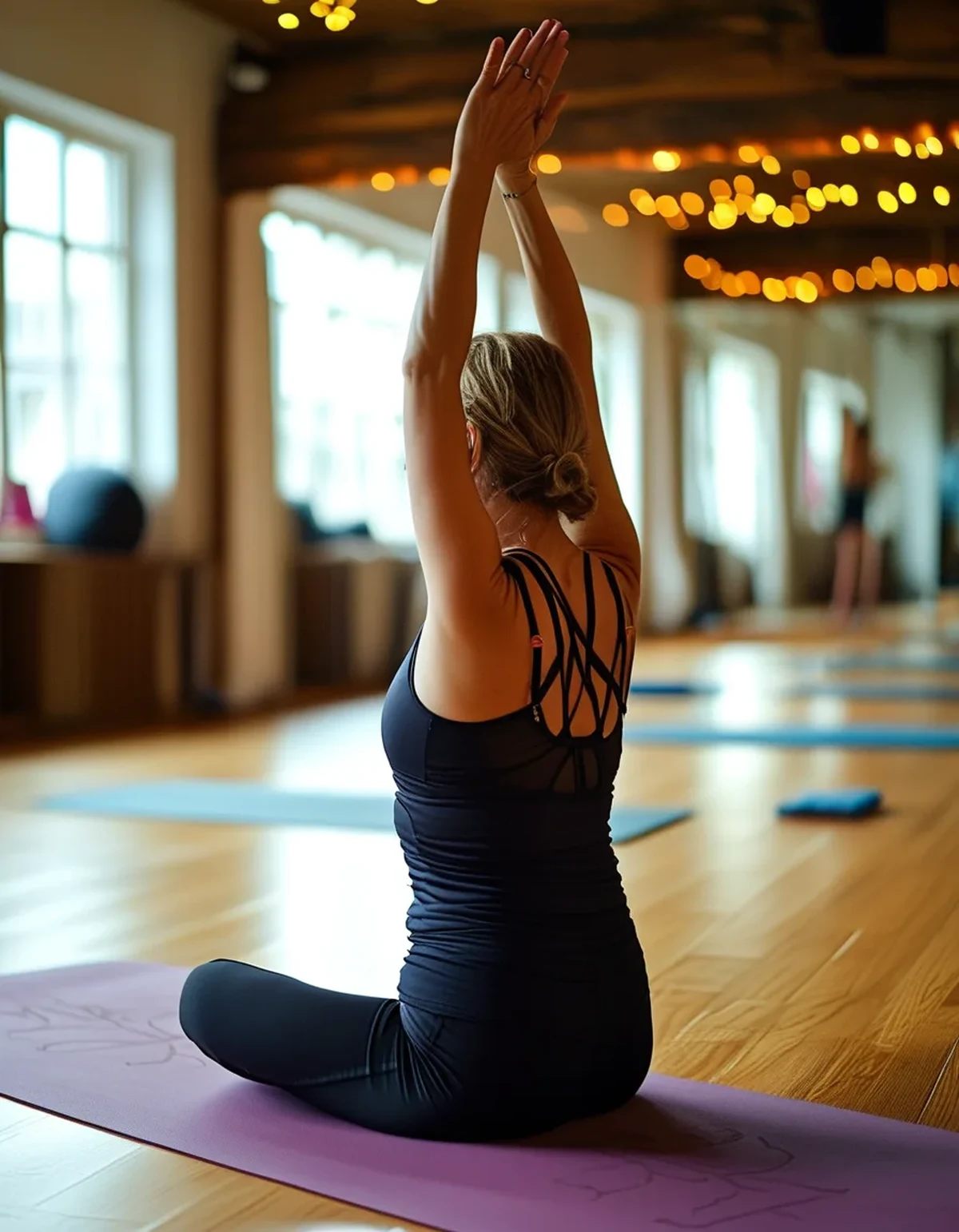
4. Your breathing pattern changes without you noticing
Cold air triggers a subtly shallower, faster breathing pattern, and cold also encourages holding the breath during effort.
Pilates breathing is specific and load-bearing — lateral costal breathing, timed exhalation on exertion. When you shift to shallow upper-chest breathing, the rib movement that Pilates breathing depends on largely disappears, and with it the intra-abdominal pressure management that makes core work effective.
The tell is feeling out of breath in a class that is not cardiovascularly demanding.
What to do: deliberately re-establish the breath before the first exercise. Hands on the lower ribs, five breaths focused on lateral expansion. If you lose it mid-class, stop and take two breaths rather than continuing with a compromised pattern — you get more from the exercise done properly than from staying in sequence.
5. Cold hands and feet break your feedback loop
Peripheral circulation drops in the cold, and Pilates uses the hands and feet as sensors far more than most training.
Foot articulation, weight distribution through the foot, hand placement in quadruped work, and the pressure feedback from a mat all depend on sensation that cold reduces. Reformer work is affected even more, since footbar and strap feedback are central.
Grip also weakens meaningfully in the cold, which shows up in plank variations and anything requiring sustained hand loading.
What to do: warm hands and feet specifically before class — grippy socks are standard and warm socks under them until you start helps. Rub hands together, do ankle circles and toe spreads, and roll each foot on a ball for 30 seconds. It is a small ritual with a disproportionate effect on how connected you feel.
6 and 7. Two factors that are not about your body
6. Equipment behaves differently in the cold
Reformer springs are stiffer when cold, which changes the resistance profile — the first few repetitions genuinely require more force than the same setting did in a warm room. Mats are firmer and less cushioned, which alters comfort in rolling and spinal work. Straps and elastic resistance stiffen too.
What to do: in the first exercises of a reformer class, consider going one spring lighter than usual and building up. This is not a compromise; it is calibrating to the actual resistance in front of you.
7. You are subconsciously bracing
This one is easy to miss and affects everything. In a cold room, the body adopts a subtly protective posture — shoulders elevated slightly, ribs held down, a general low-grade guarding. That posture is close to the opposite of the open, lengthened alignment Pilates asks for.
What to do: a deliberate reset before the first exercise. Roll the shoulders back and down, lengthen through the crown, take one large breath, and let it go. Then check again five minutes in, because guarding creeps back until the room or your body warms up.
And the meta-point that covers all seven: none of these are you getting worse. If a class feels wrong in a cold room, adjust the warm-up rather than the conclusion you draw about your practice.
FAQ: Cold Studio Pilates Questions, Answered
How long should I warm up before a cold-room class?
Ten to fifteen minutes of gradual movement, roughly double a warm-room warm-up. Five of those can be general movement before class starts, with the remainder covered by not rushing the class’s own preparatory section. It feels excessive and it makes the difference.
Should I wear more layers or fewer during class?
Start with one more layer than you think you need and remove it around the ten-minute mark. Staying warm early is far more valuable than avoiding a brief moment of being too warm later. Grippy socks are worth wearing regardless of temperature.
Is it bad for my joints to do Pilates in a cold room?
Not inherently, provided you warm up properly and do not force range. The genuine risk is pushing into a range that is temporarily unavailable — that is where strains happen. Work within what your body offers on the day and it will offer more by the end of the session.
Why does my instructor’s cueing not seem to work in the cold?
Because cues rely on proprioceptive feedback that cold dulls. It is not the cue and it is not you. Ask for a tactile cue or a more physical reference point if one is available — external feedback compensates well for reduced internal feedback.
TL;DR:
- Cold tissue is stiffer, so your available range genuinely shrinks — warm up twice as long as usual.
- Slower nerve conduction makes deep recruitment harder; do not rush the preparatory work.
- Higher resting muscle tone makes selective relaxation harder — stay layered for ten minutes and exhale longer.
- Cold air shallows your breathing, which undermines the rib movement Pilates depends on.
- Cold hands and feet dull the sensory feedback the practice relies on.
- Springs, straps, and mats all behave differently in the cold — recalibrate rather than push.
- You are probably bracing without knowing it. Reset your posture deliberately before you start.
A cold room does not reveal that you have lost your practice. It just means the first fifteen minutes have to do the work the room usually does for you.
See It in Motion
Seen here: High Waist Yoga Leggings with Side Pockets — shop it on bubblelime.com
Keep Reading
This article is for general informational and styling purposes only. Fit, sizing, and product availability may vary.