7 Pilates Ring Mistakes That Quietly Cancel Out the Resistance You're Working For
Quick Answer: The Pilates ring only delivers real resistance when it’s pressed through a full, controlled range with steady tension maintained the entire time — common mistakes like bracing it against a joint instead of muscle, letting the arms do all the work instead of the core, or using quick pulses instead of slow presses can quietly cut the effective resistance to almost nothing while still looking like a full set.
The ring itself doesn’t do the work. How you press against it decides whether a set actually trains anything at all.

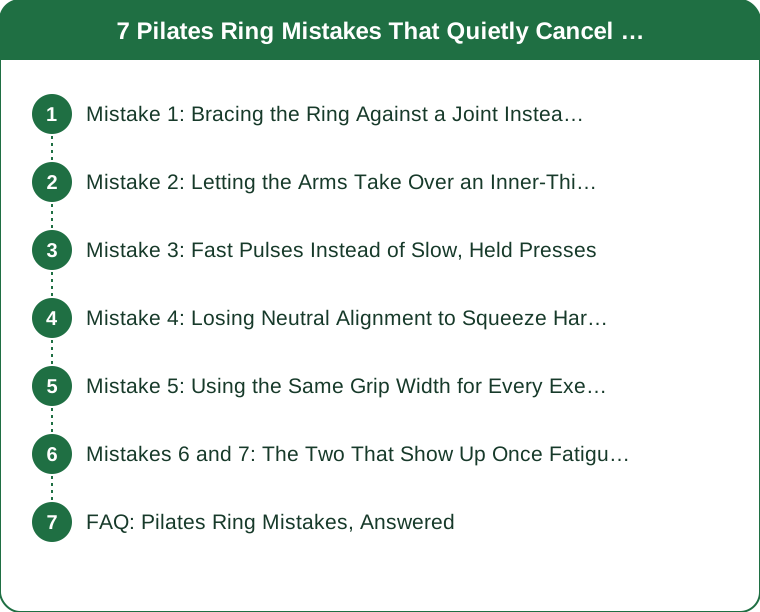
Mistake 1: Bracing the Ring Against a Joint Instead of Muscle
Pressing the ring’s edge directly against a bony point like the inner knee or wrist transfers load to the joint instead of the target muscle, which feels stable but does almost nothing for actual strength — the ring should press into soft tissue where a muscle can genuinely resist it.
Mistake 2: Letting the Arms Take Over an Inner-Thigh or Core Squeeze
When the ring is held between the knees or ankles, tension in the shoulders and arms can quietly substitute for the leg or core squeeze that’s supposed to be doing the work, especially once fatigue sets in during later reps.
Mistake 3: Fast Pulses Instead of Slow, Held Presses
Quick, bouncy pulses rely on the ring’s own spring-back rather than continuous muscular tension, which can make a set look busy while providing far less time under tension than a slower, deliberately controlled press and release.

Mistake 4: Losing Neutral Alignment to Squeeze Harder
Rounding the spine or shifting the pelvis to generate a stronger-feeling squeeze trades form for a false sense of intensity, and usually means the ring is being crushed by momentum rather than pressed by the actual target muscle group.
Mistake 5: Using the Same Grip Width for Every Exercise
Holding the ring at the same width regardless of the exercise changes the leverage and resistance angle, meaning a grip that’s ideal for a thigh press can be nearly ineffective for an arm or back exercise using the same prop.
Mistakes 6 and 7: The Two That Show Up Once Fatigue Sets In
Mistake 6: Shortening the Range as Reps Get Harder
As fatigue builds late in a set, the range of motion often quietly shrinks even though the rep still gets counted, which reduces the actual work done without any visible change to form at first glance.
Mistake 7: Skipping the Release Phase
Focusing only on the pressing-in phase and letting the ring spring back uncontrolled skips half of the resistance benefit, since controlling the release is where a meaningful portion of the muscular work actually happens.
FAQ: Pilates Ring Mistakes, Answered
How do I know if I’m actually engaging the right muscle instead of bracing against a joint?
A slight, sustained burn in the target muscle group rather than a pinching or pressure sensation at a joint is the more reliable signal that tension is landing where it should.
Does ring resistance level (soft versus firm) change how easy these mistakes are to make?
Yes — softer rings make joint-bracing and momentum-based pulses easier to fall into since they offer less resistance to correct poor form, while firmer rings tend to expose these mistakes faster.
Is it normal for form to break down toward the end of a set?
Some breakdown is expected as fatigue builds, but reducing range noticeably or losing neutral alignment is a sign to shorten the set rather than push through with compromised form.
TL;DR:
- The ring only trains muscle when pressed against soft tissue, not braced on a joint
- Slow, controlled presses build more tension than fast pulses that rely on spring-back
- Grip width should change by exercise, and the release phase matters as much as the press
- Fatigue-related range shrinkage is the most common way a set quietly loses its effectiveness
See It in Motion
Seen here: Crewneck Short Sleeve Workout T-Shirt — shop it on bubblelime.com
Keep Reading
This article is for general informational and styling purposes only. Fit, sizing, and product availability may vary.